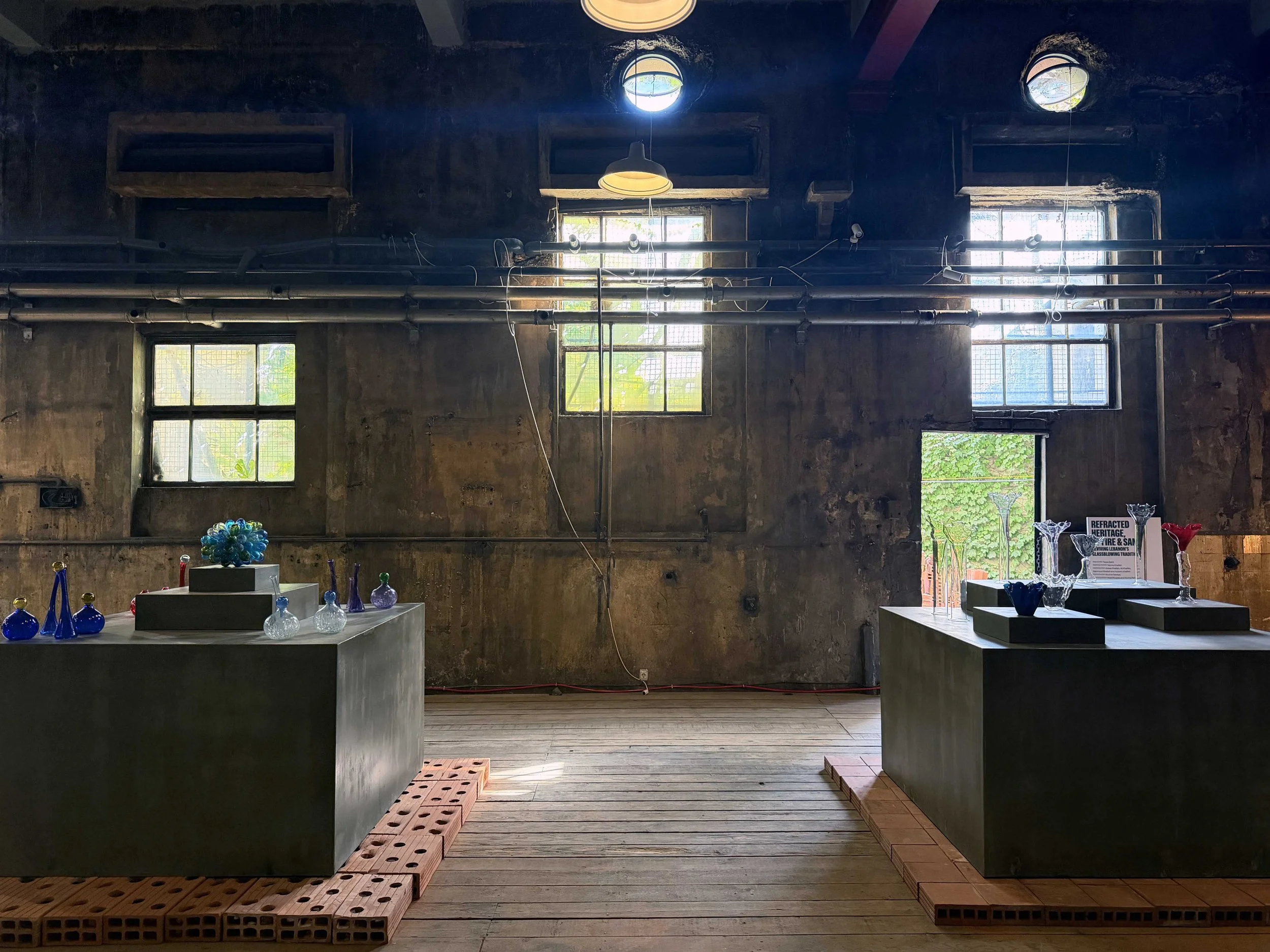
REFRACTED HERITAGE: OF FIRE & SAND
Glassblowing Exhibition
Curation & Design | Tessa Sakhi
Featured Glassblowers | Mahmoud Khalifeh, Ali Khalifeh, Abbas Khalifeh, Abed Najjar
Glassblowing Assistant | Habib Khalifeh
Glassblowing Coordinator | Nisrine Khalifeh
Featured Flameworkers | Boutros Sawaya, Wael Moujaess
Flameworking Assistant | Norma Rehbani
Event | We Design Beirut Edition Two, Métiers d’Art Crafts Exhibition
Partner & Creative Director | Samer Alameen
Project Coordinator | Lana Fakhouri
Location | Abroyan Factory, Beirut, Lebanon
Sponsors | Swiss Development Cooperation, Tessa Sakhi, Samer Alameen
Clay Tile Flooring | Müller Industries
Lighting | Unilux
Display Manufacturer | Joe Habchy
Area | 20 sqm
Date of Completion | October 2025
Photos | Bernard Khalil
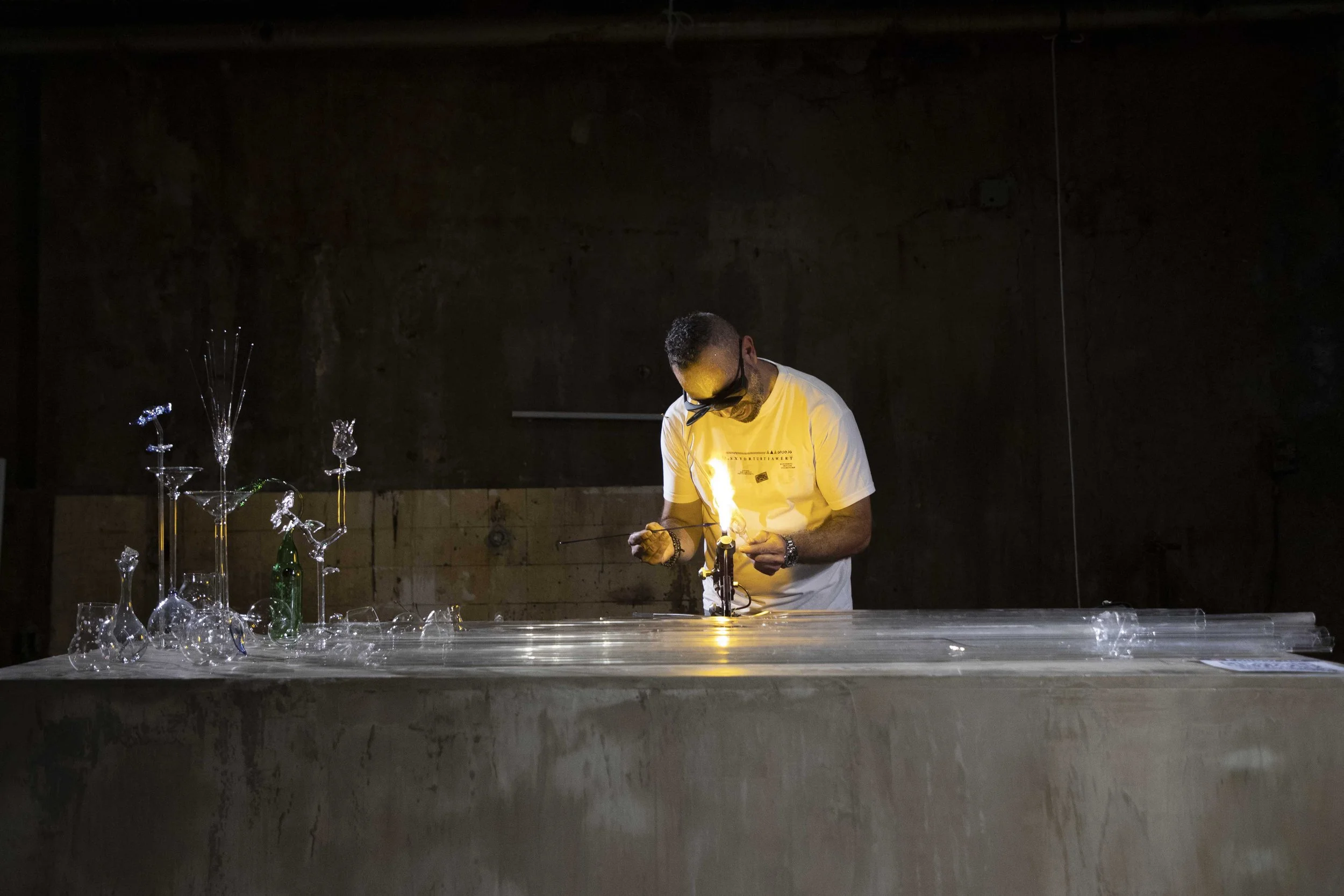
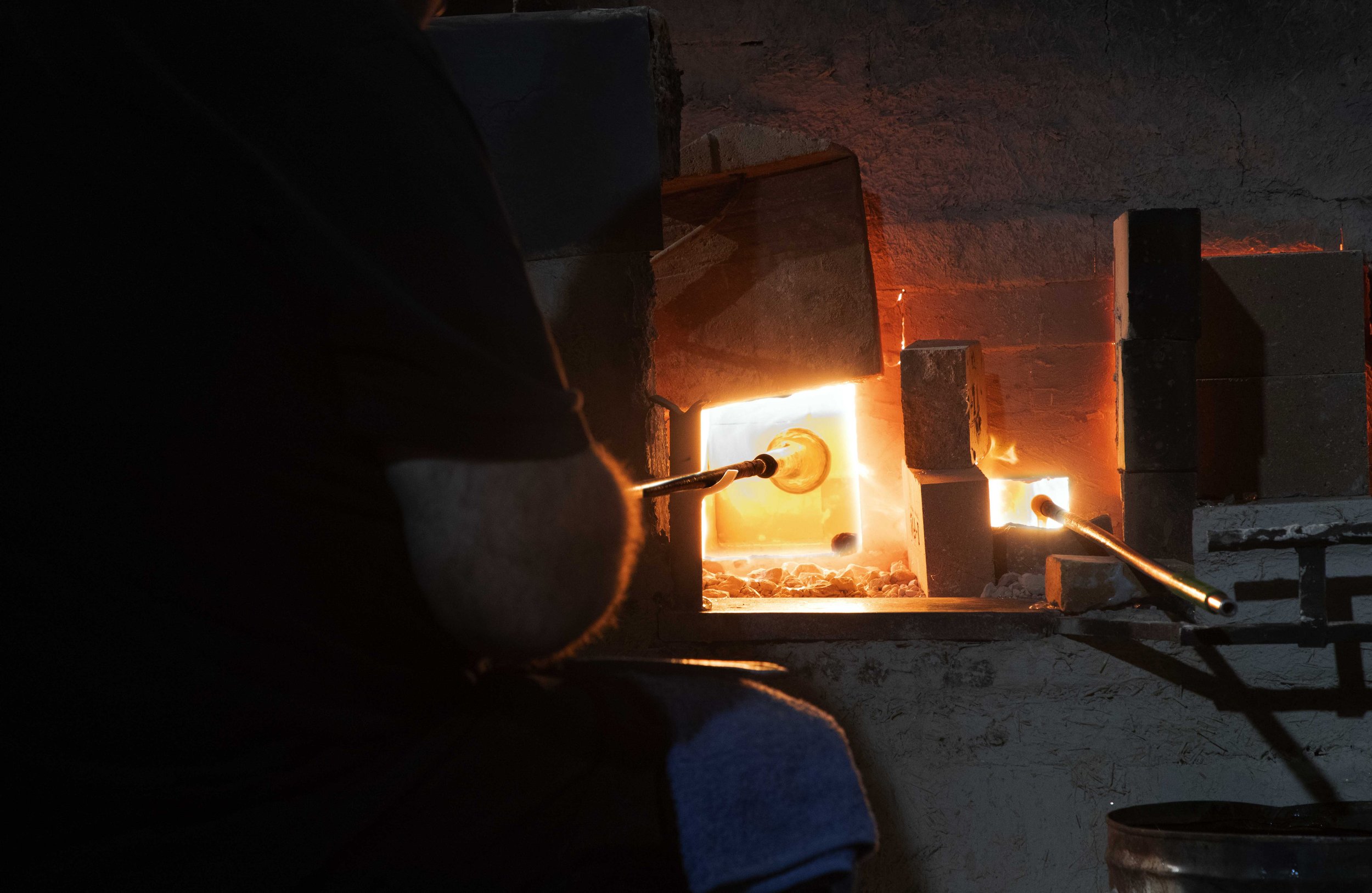
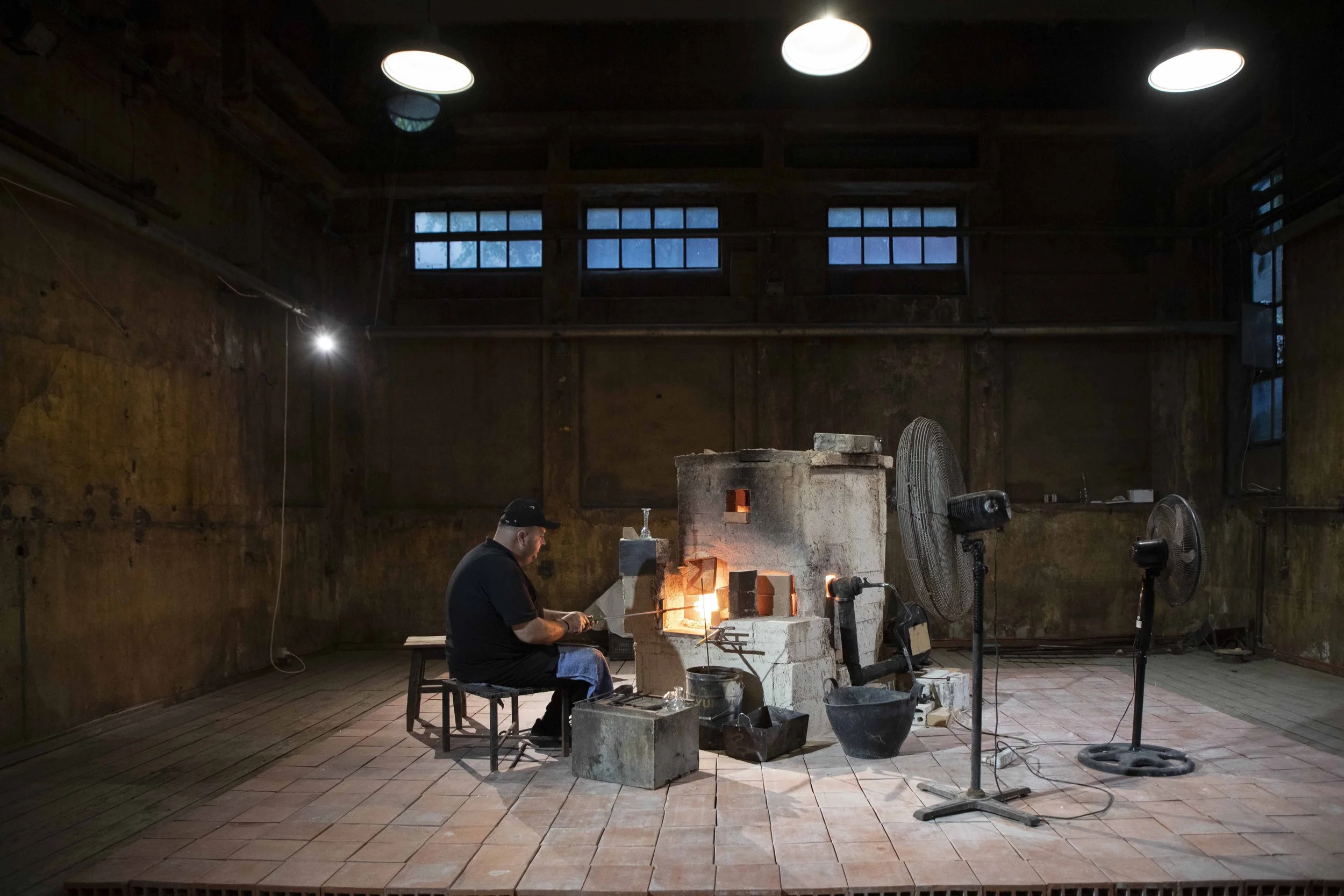
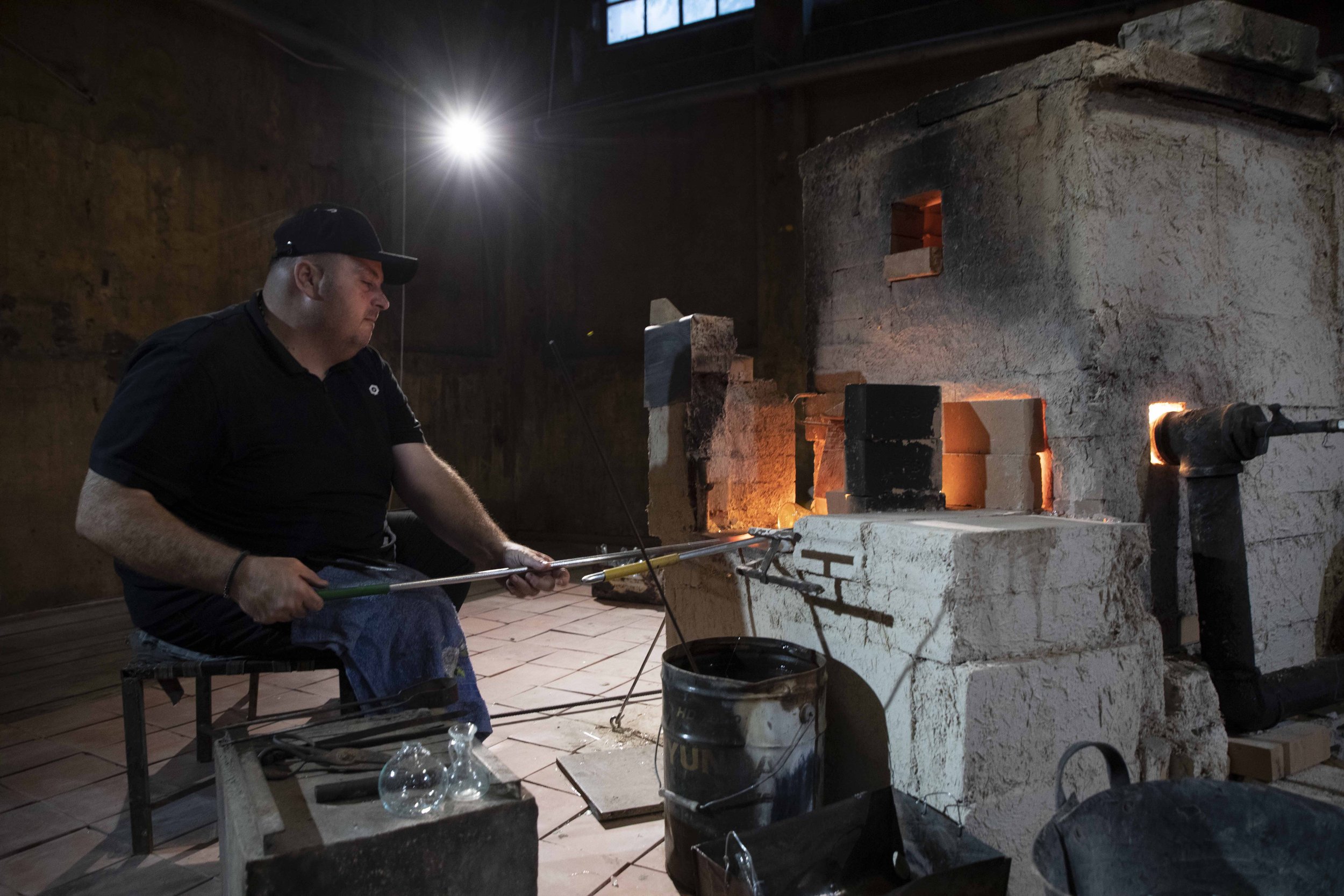
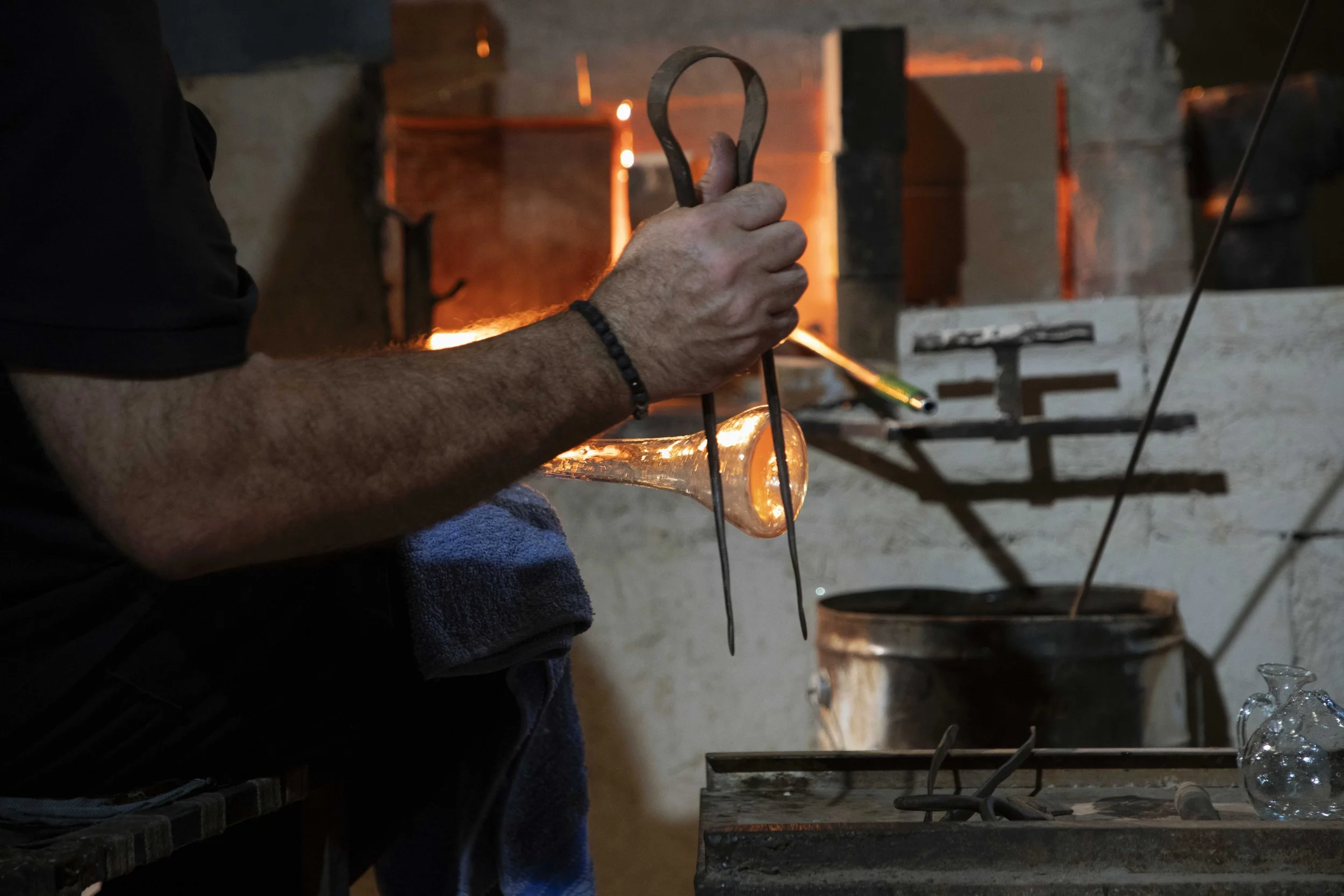
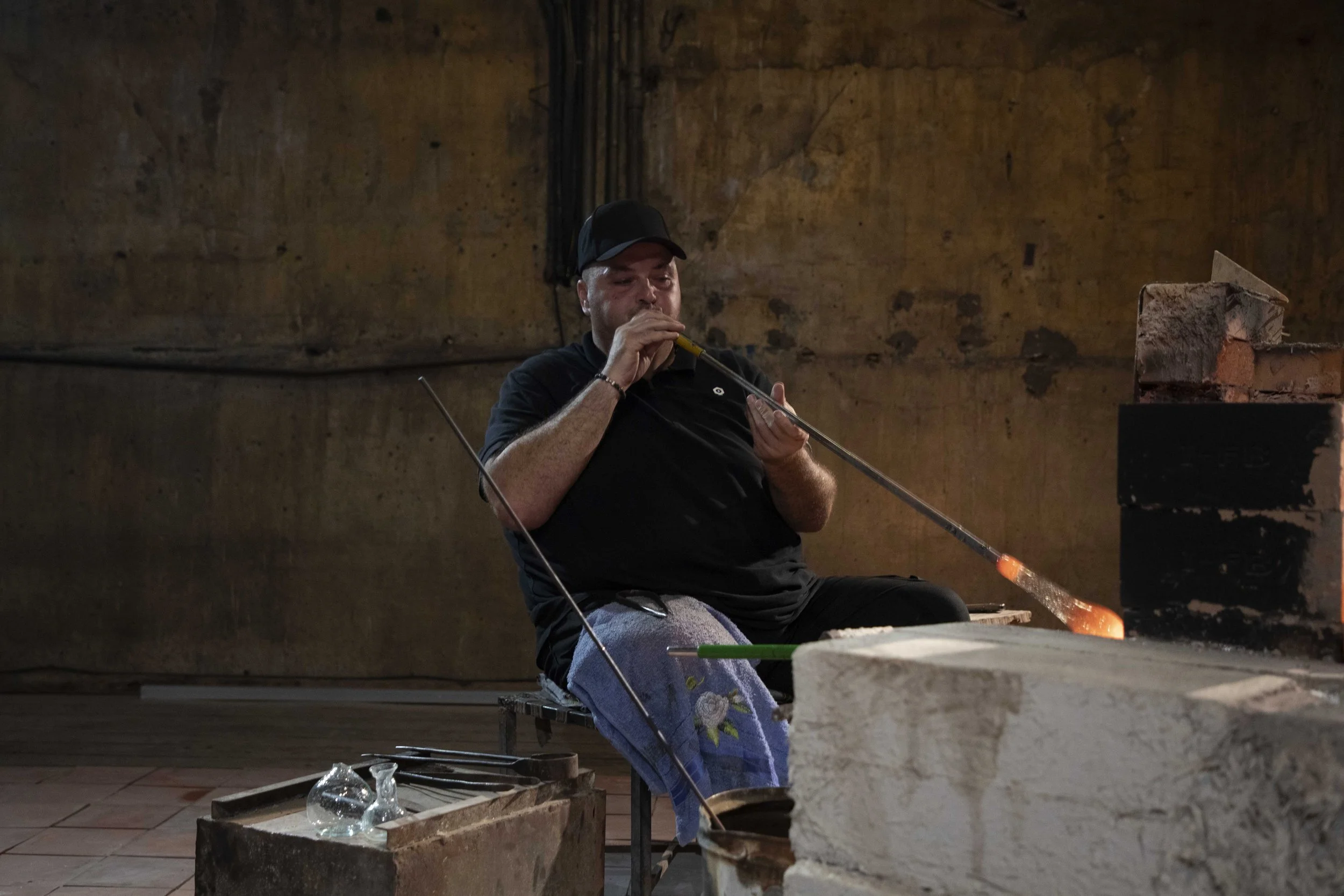
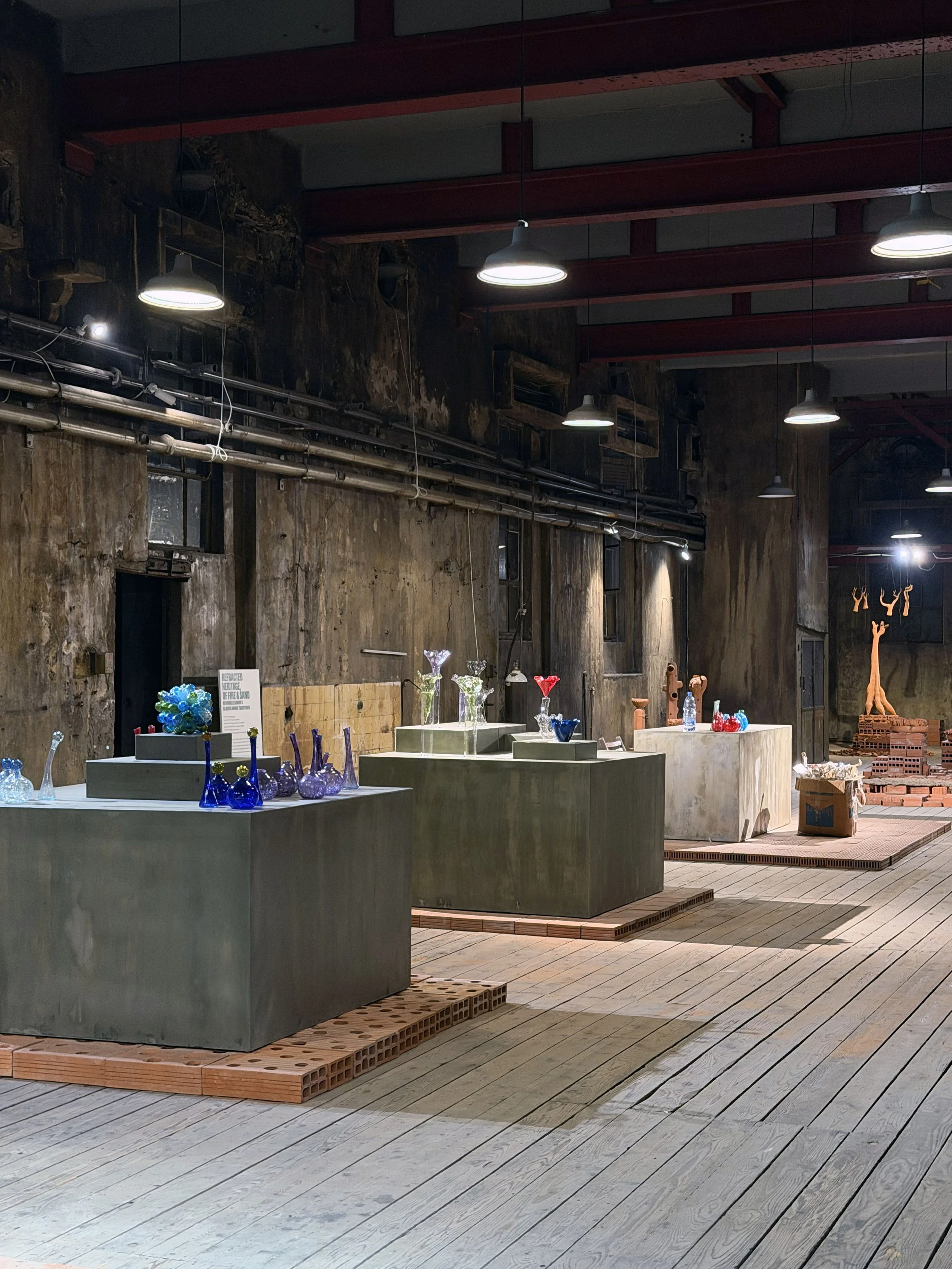
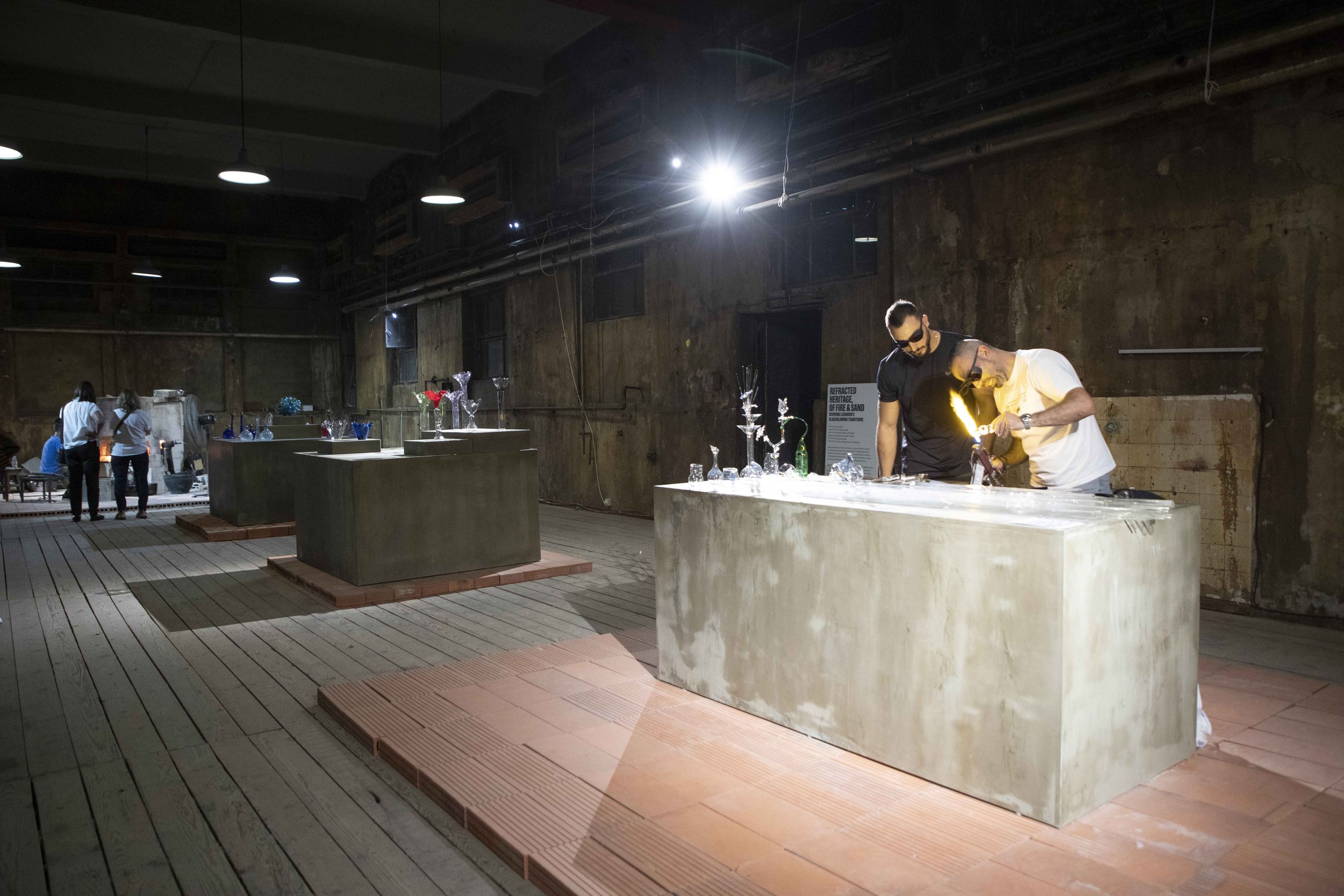
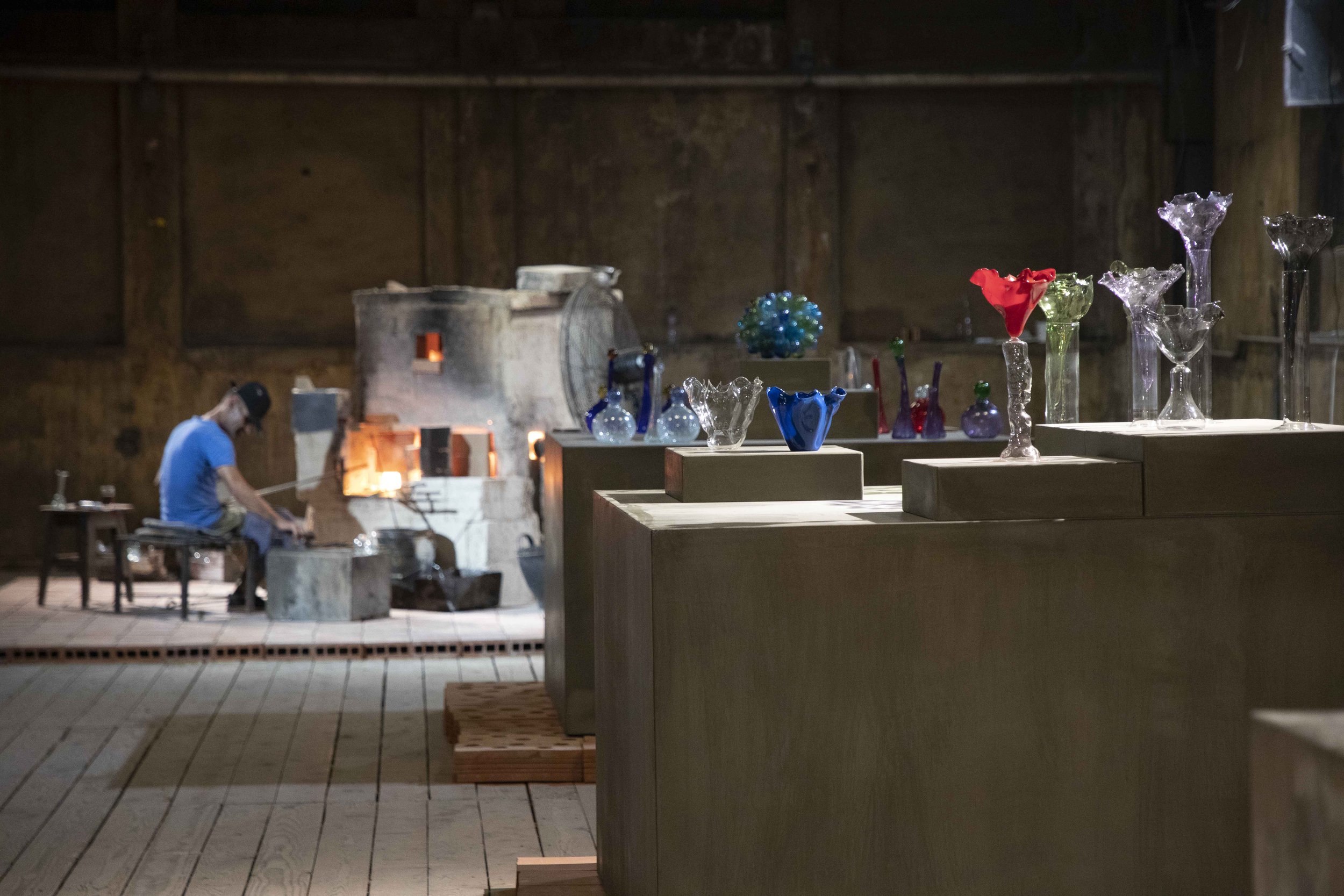
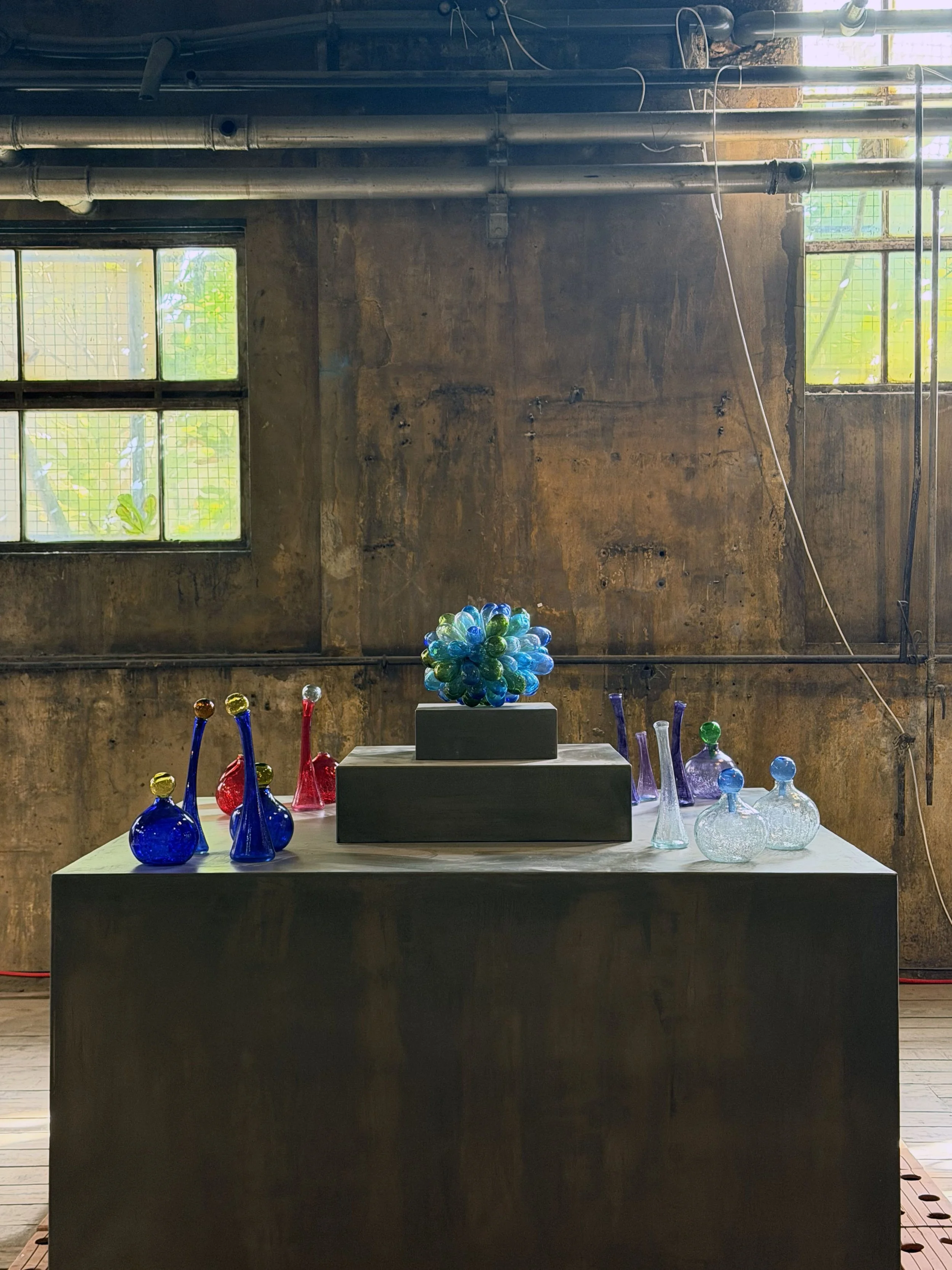
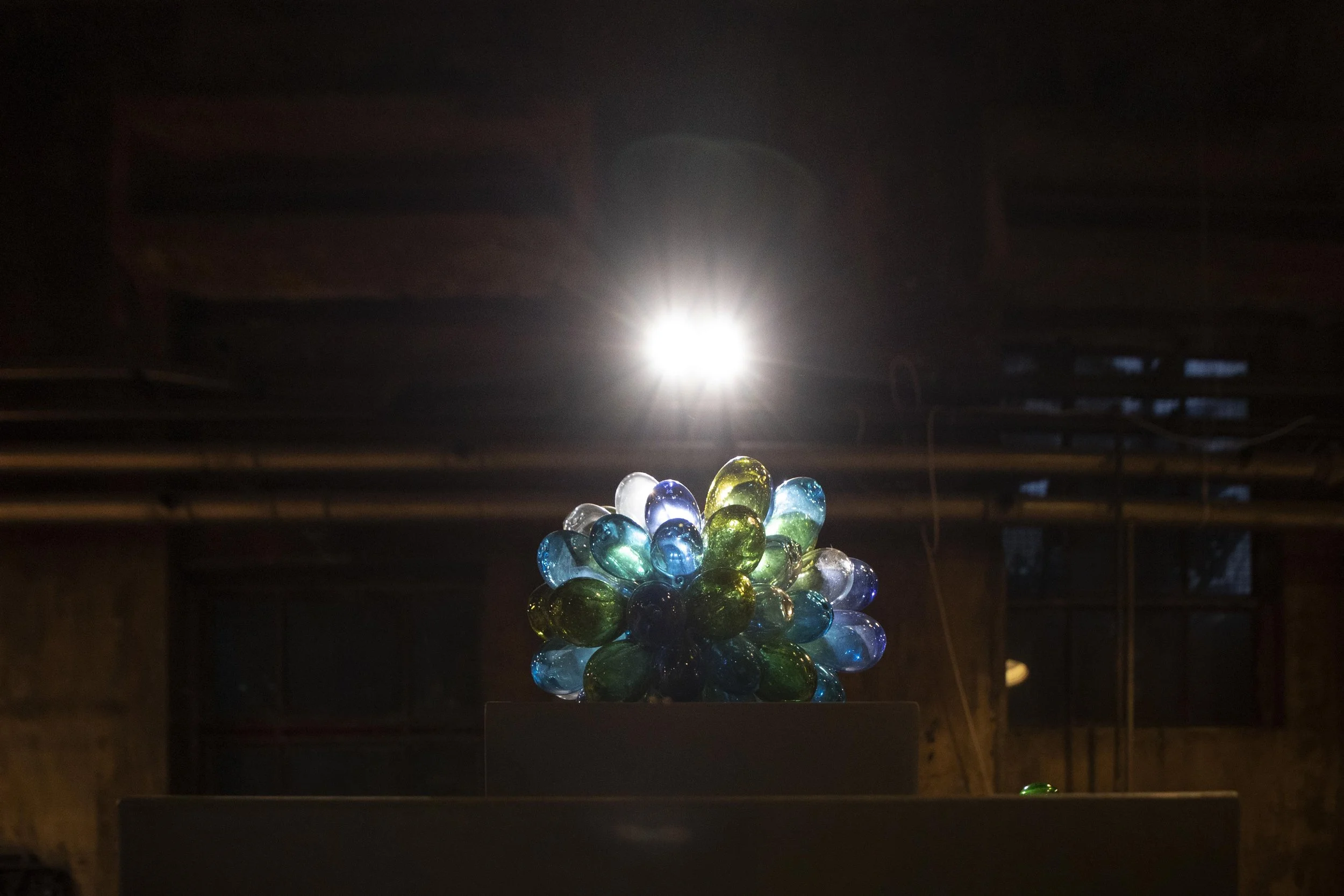
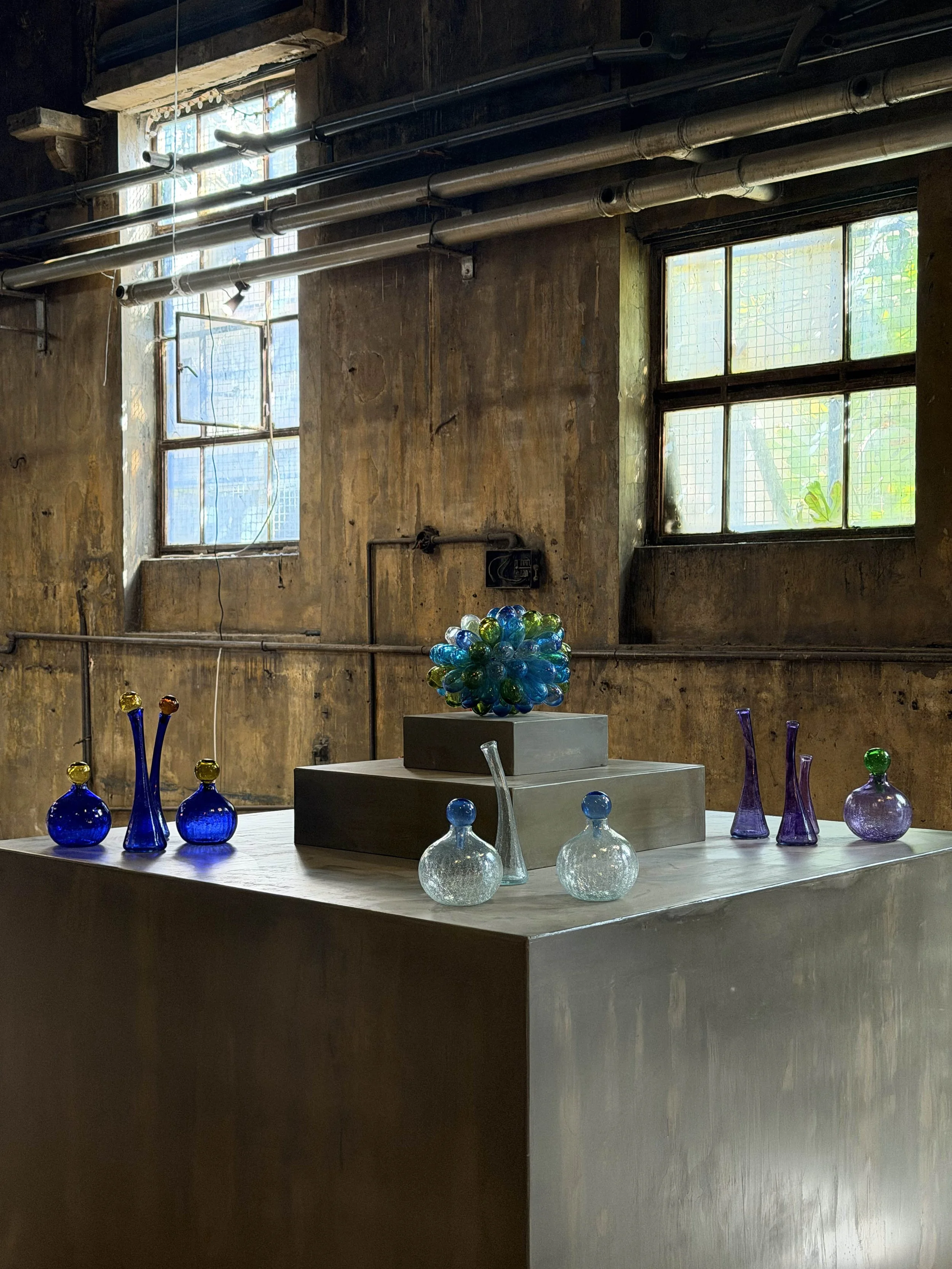
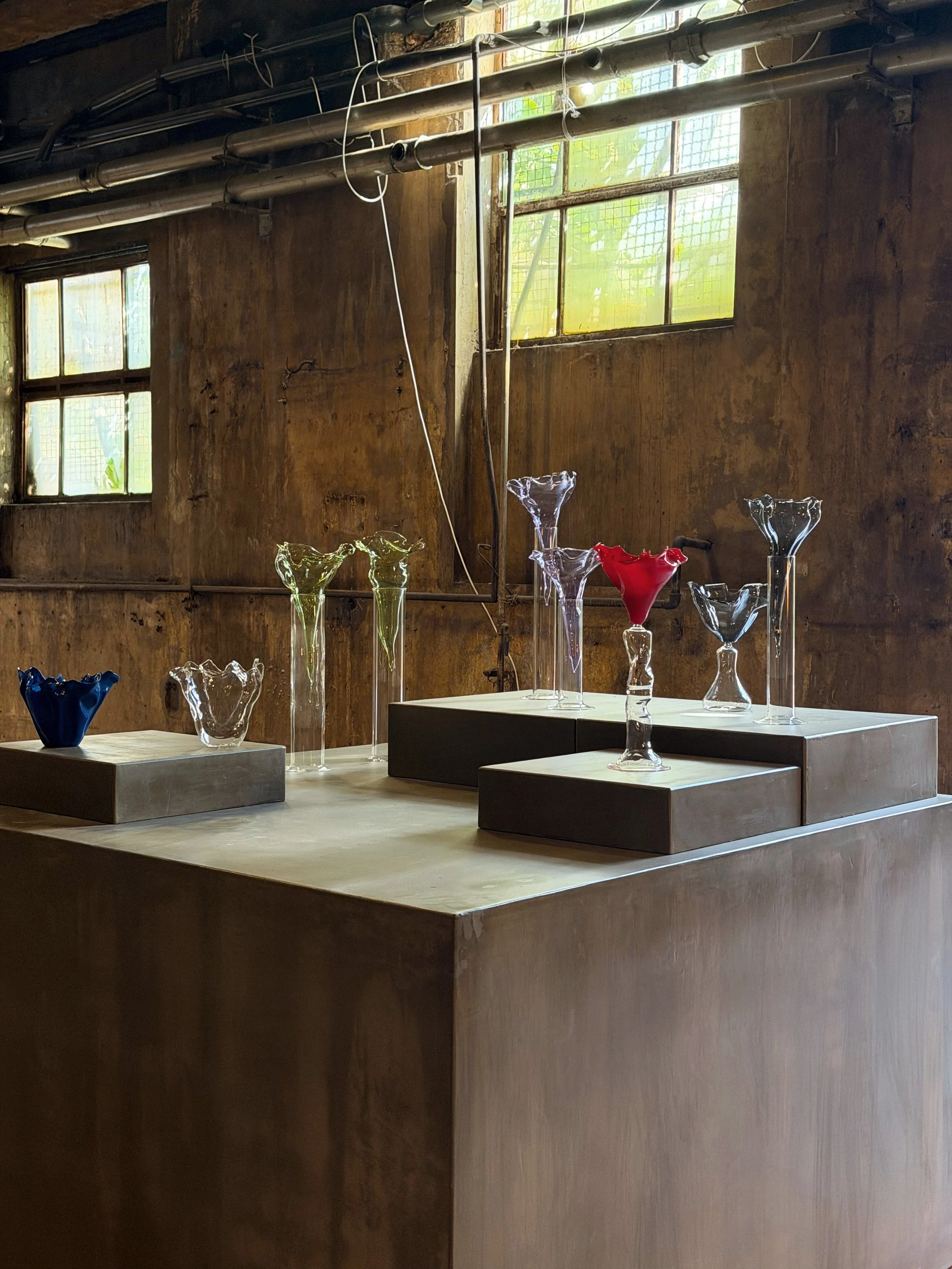
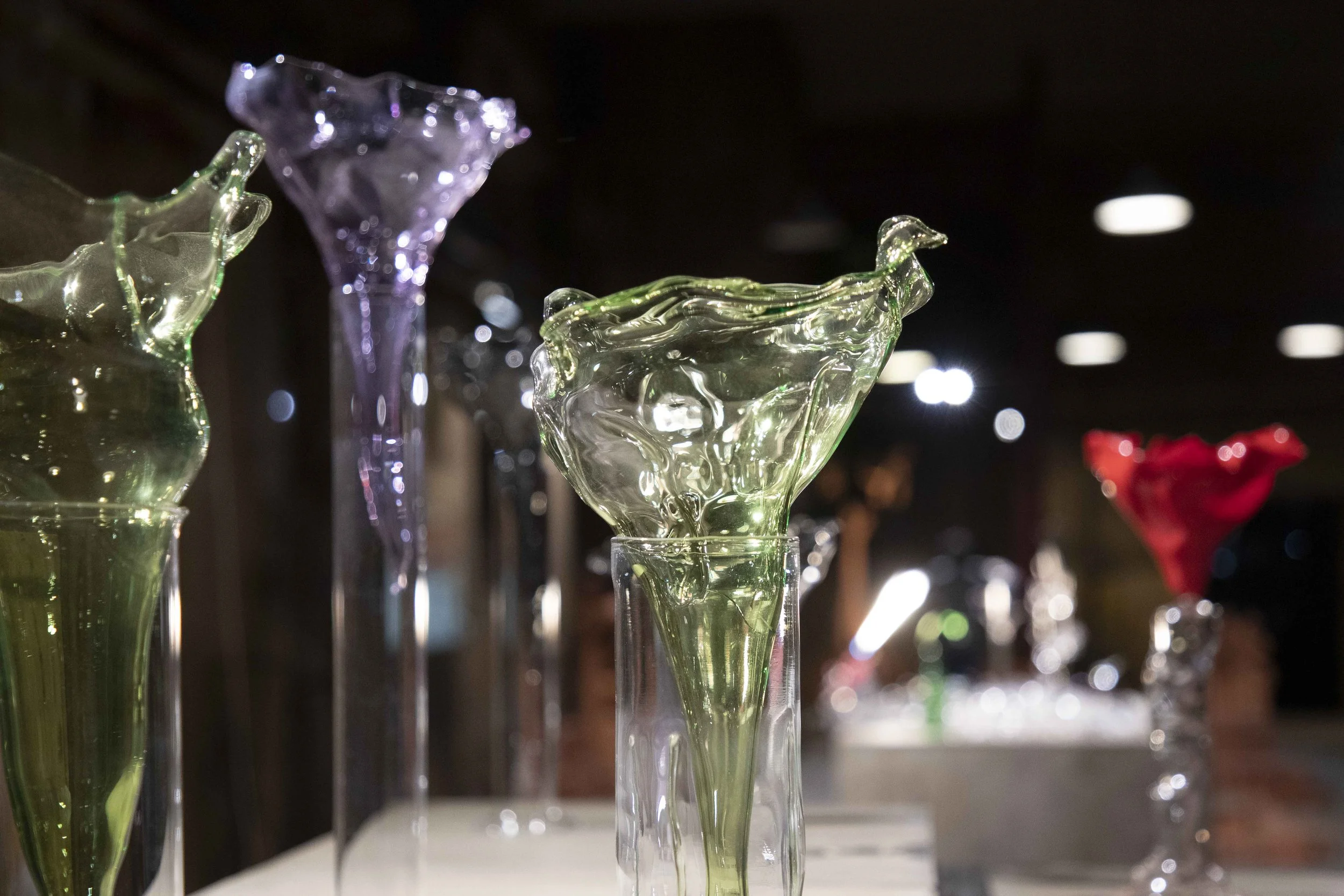
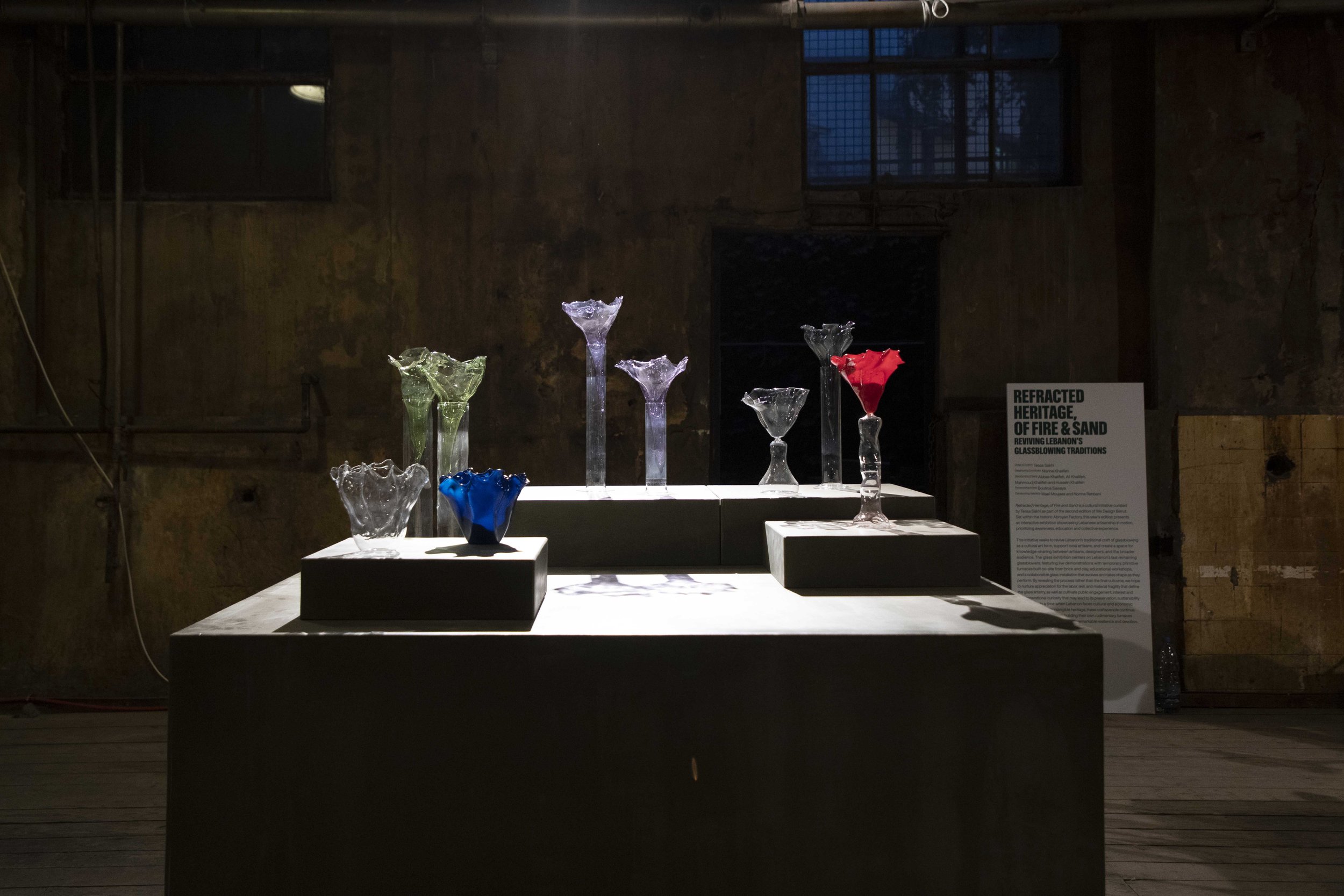
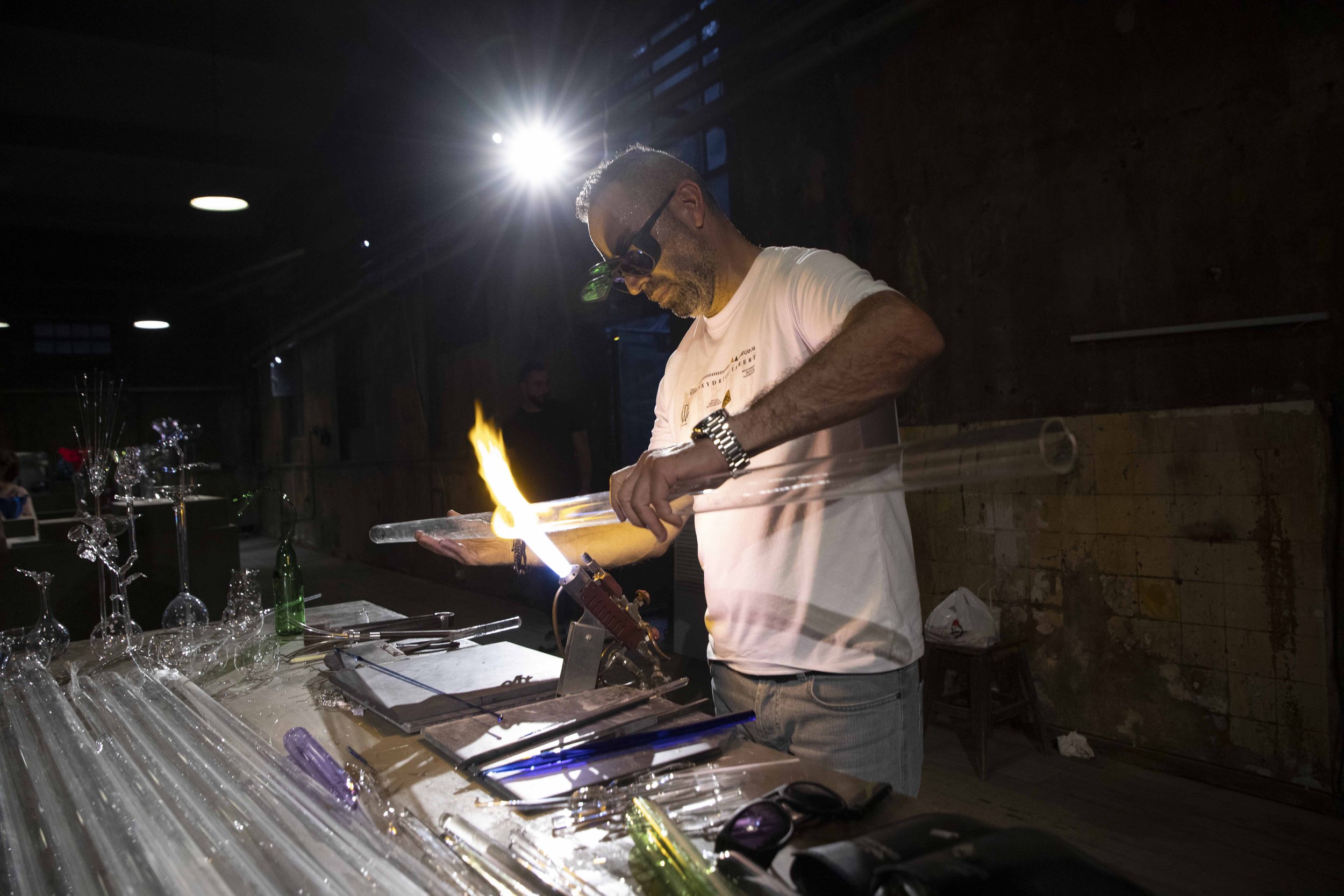
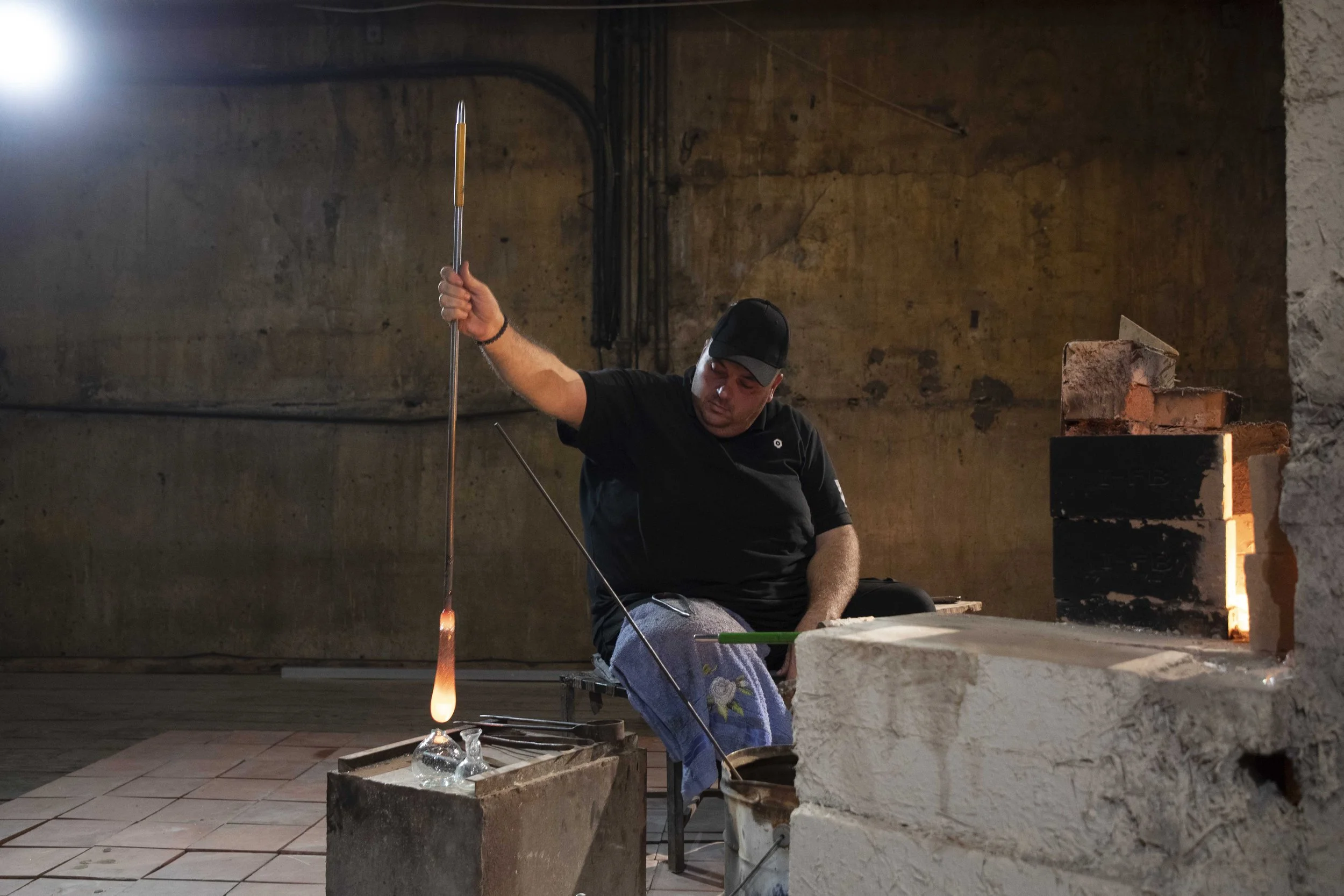
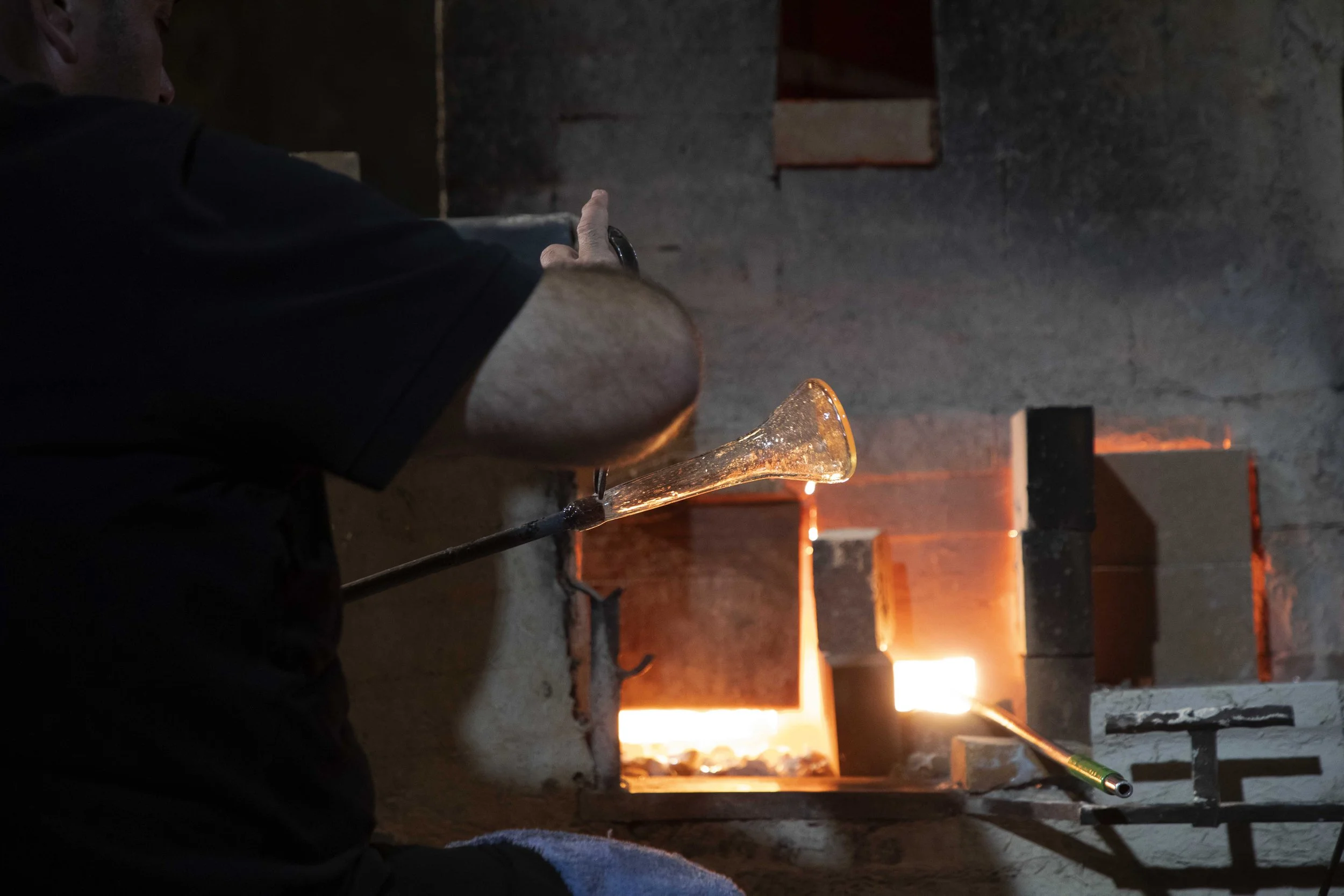
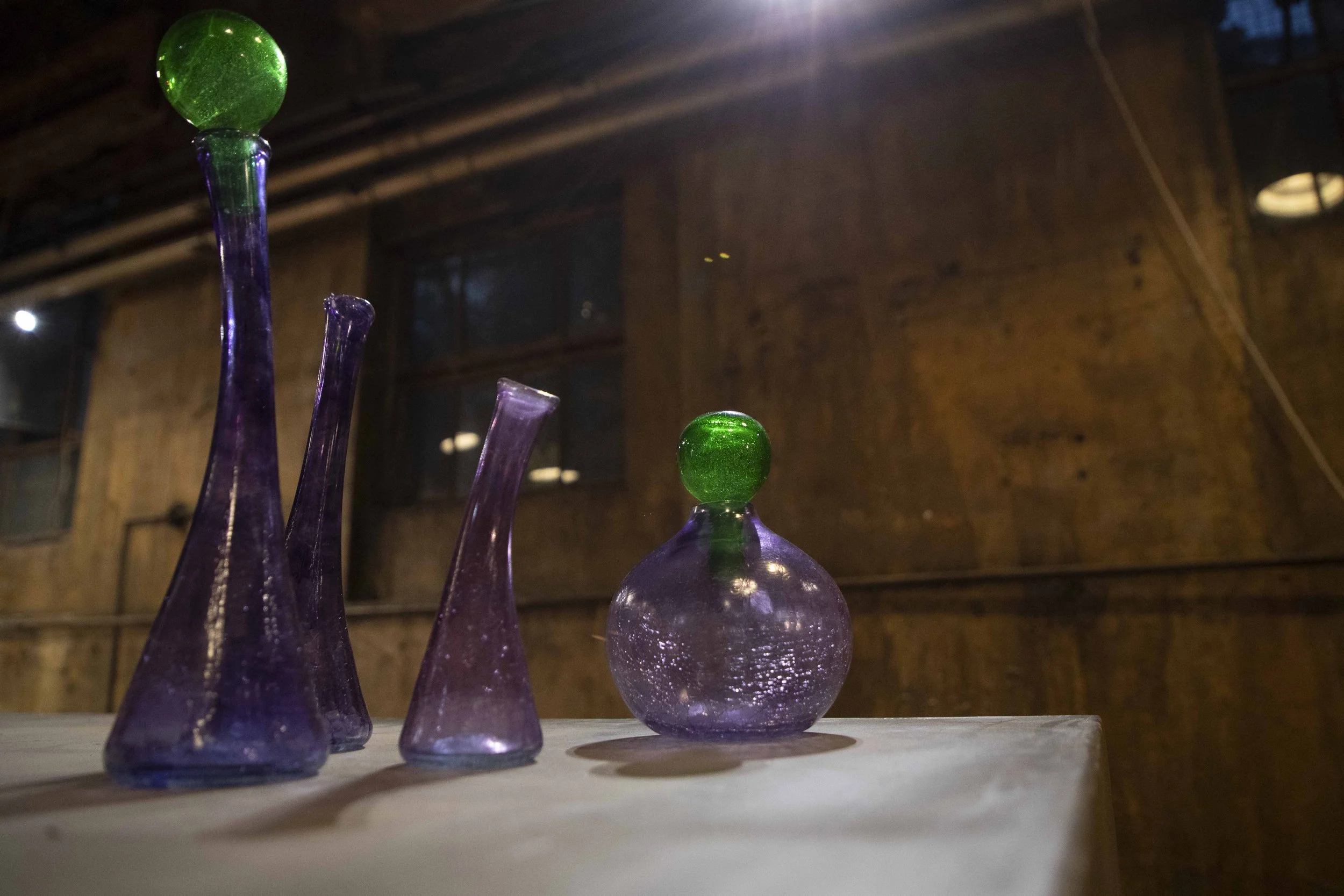
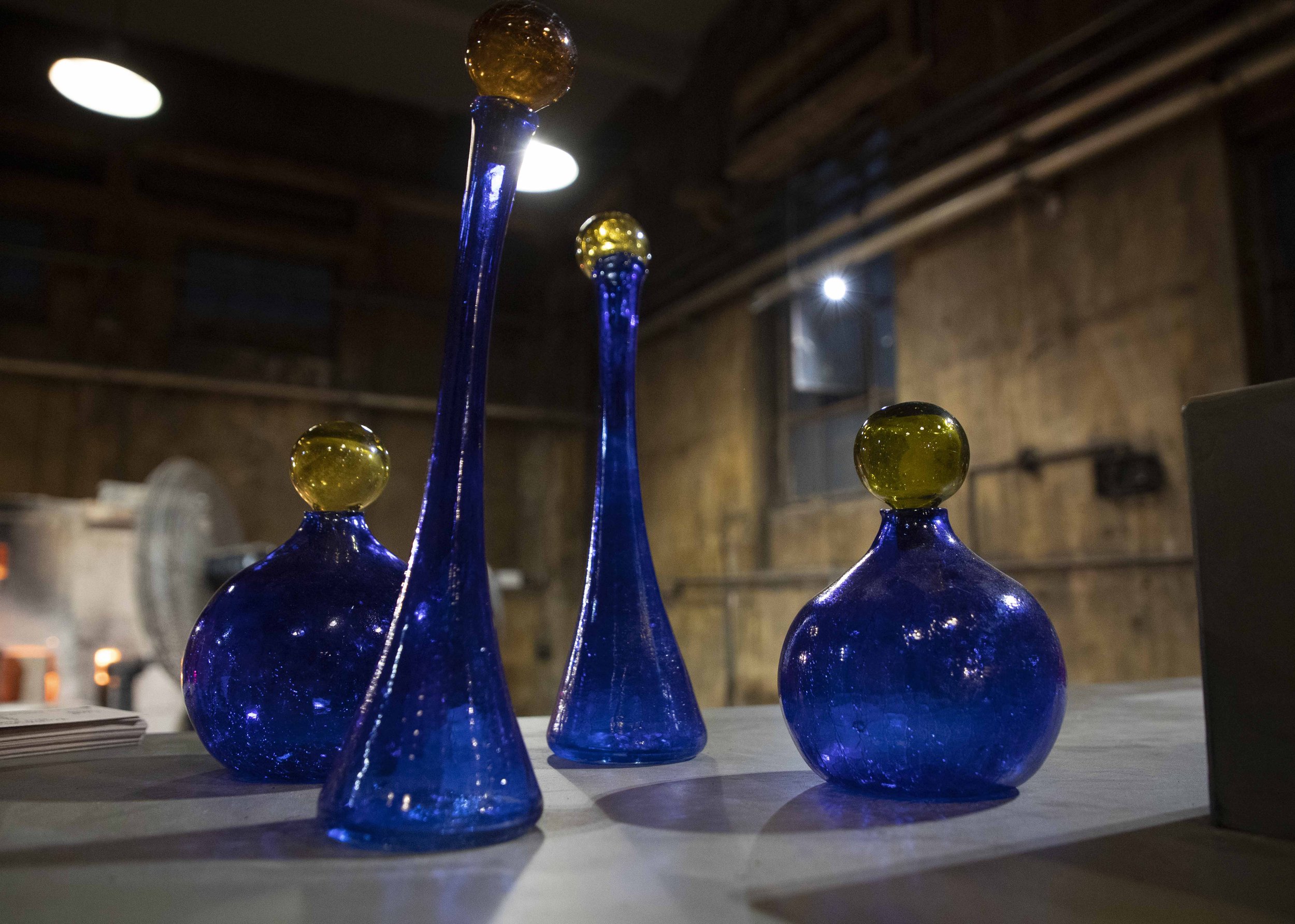
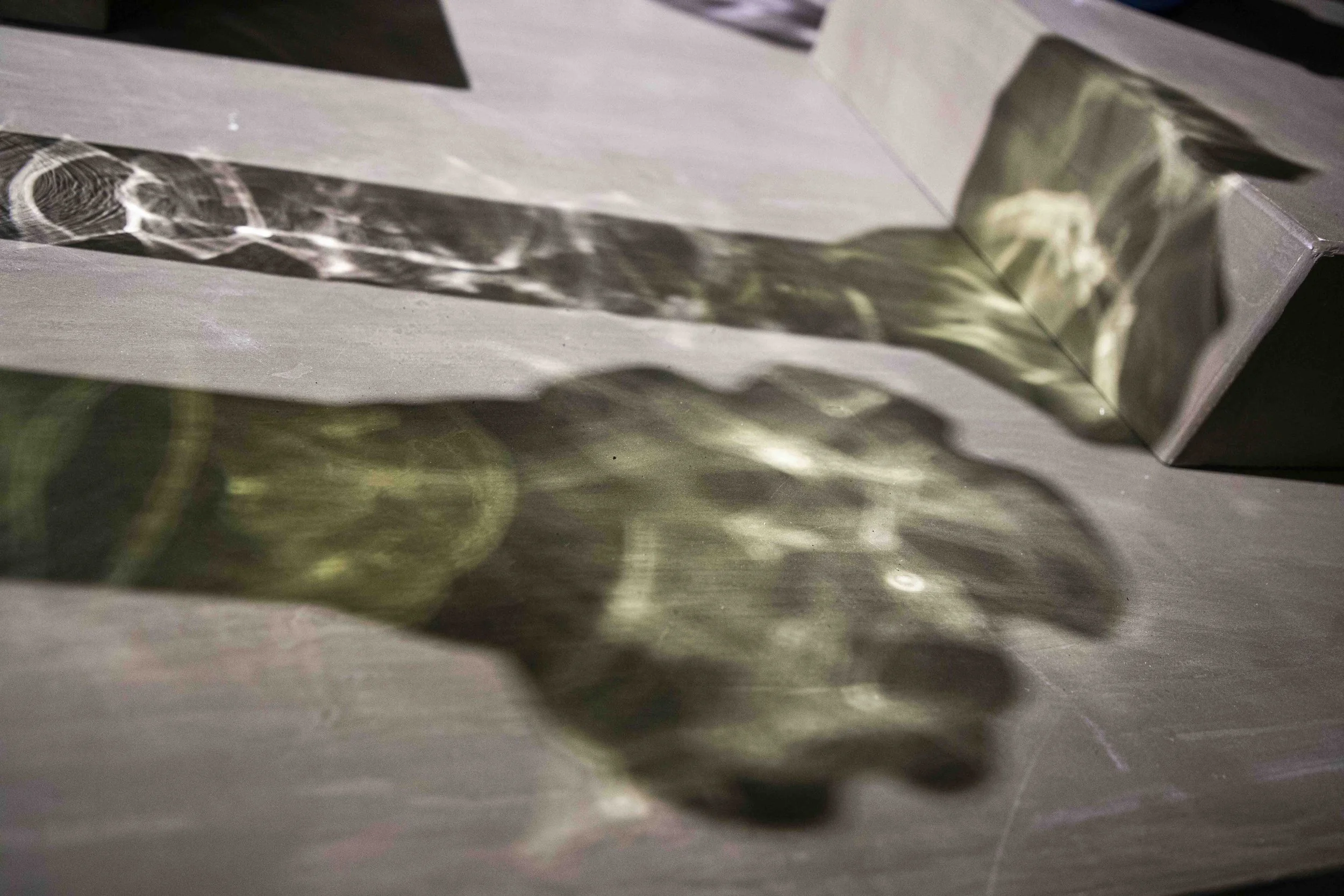
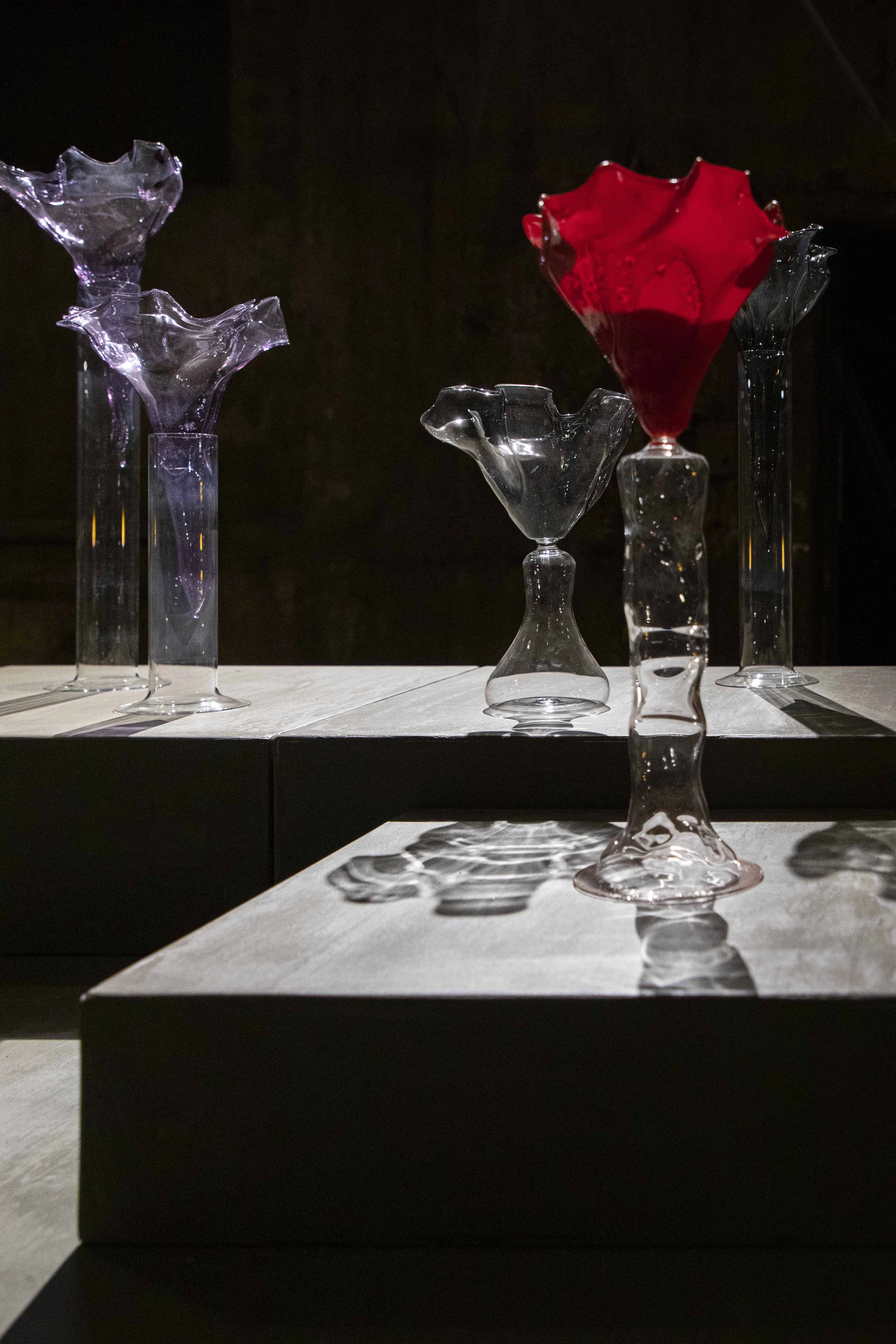
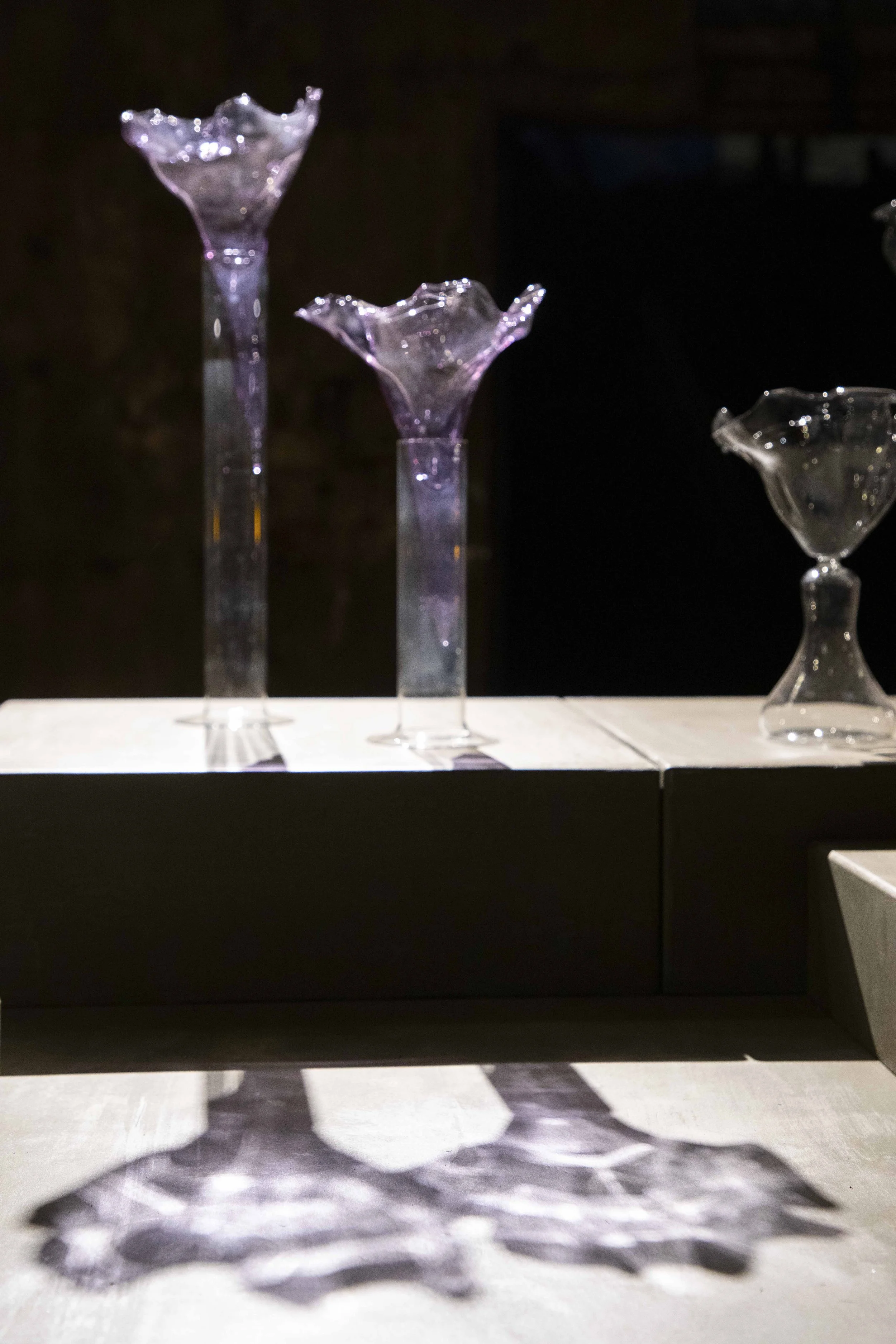
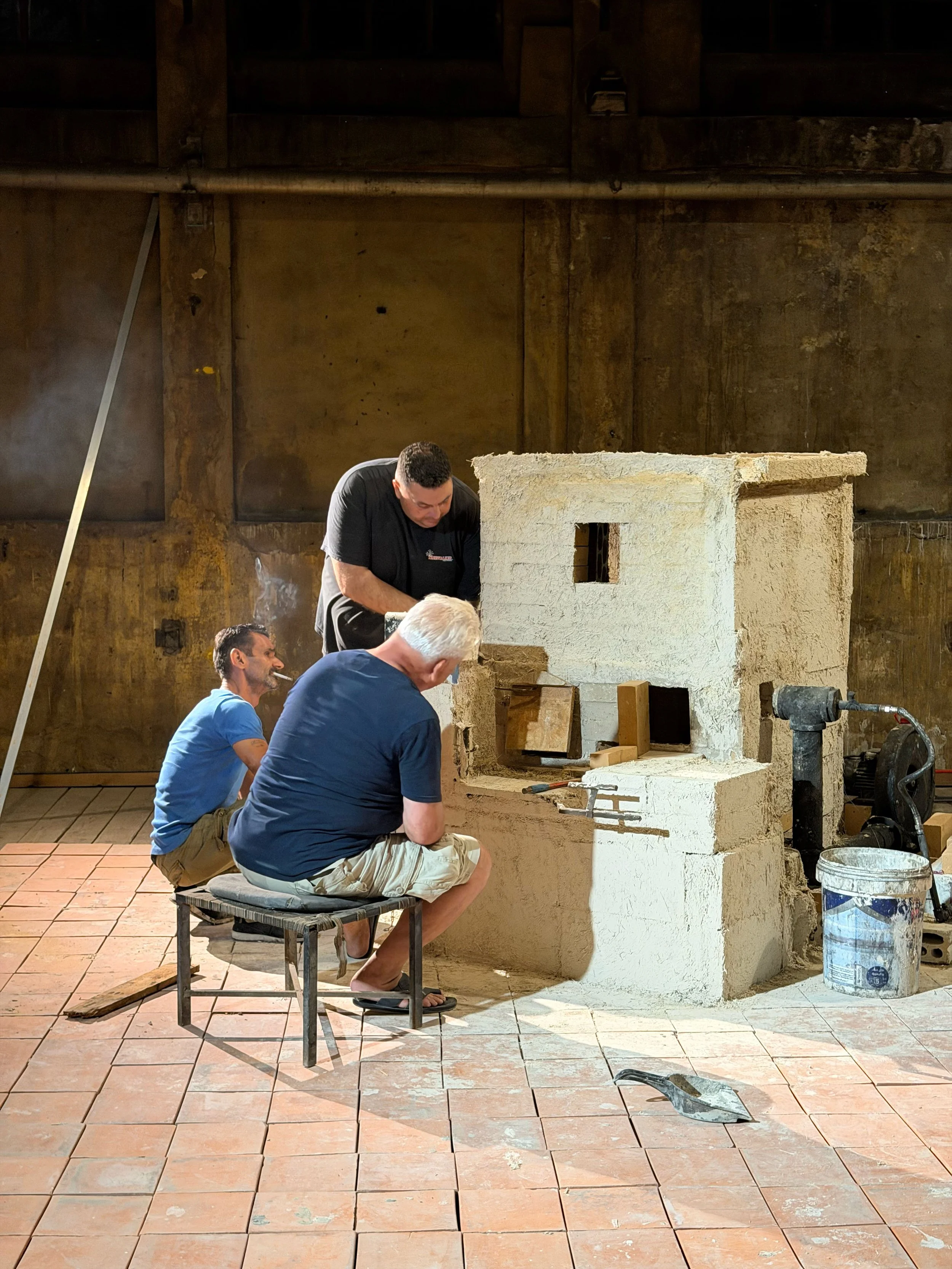
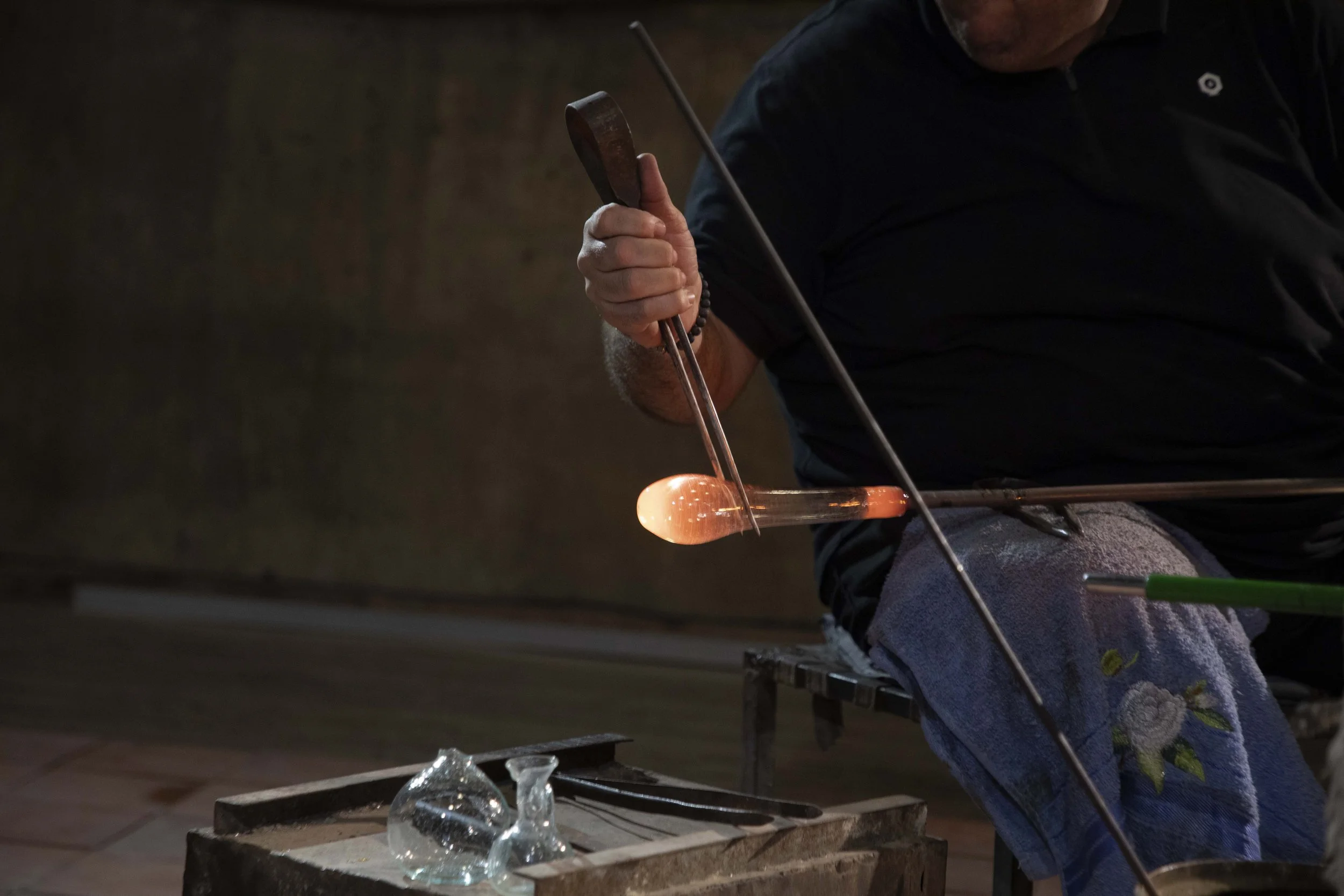
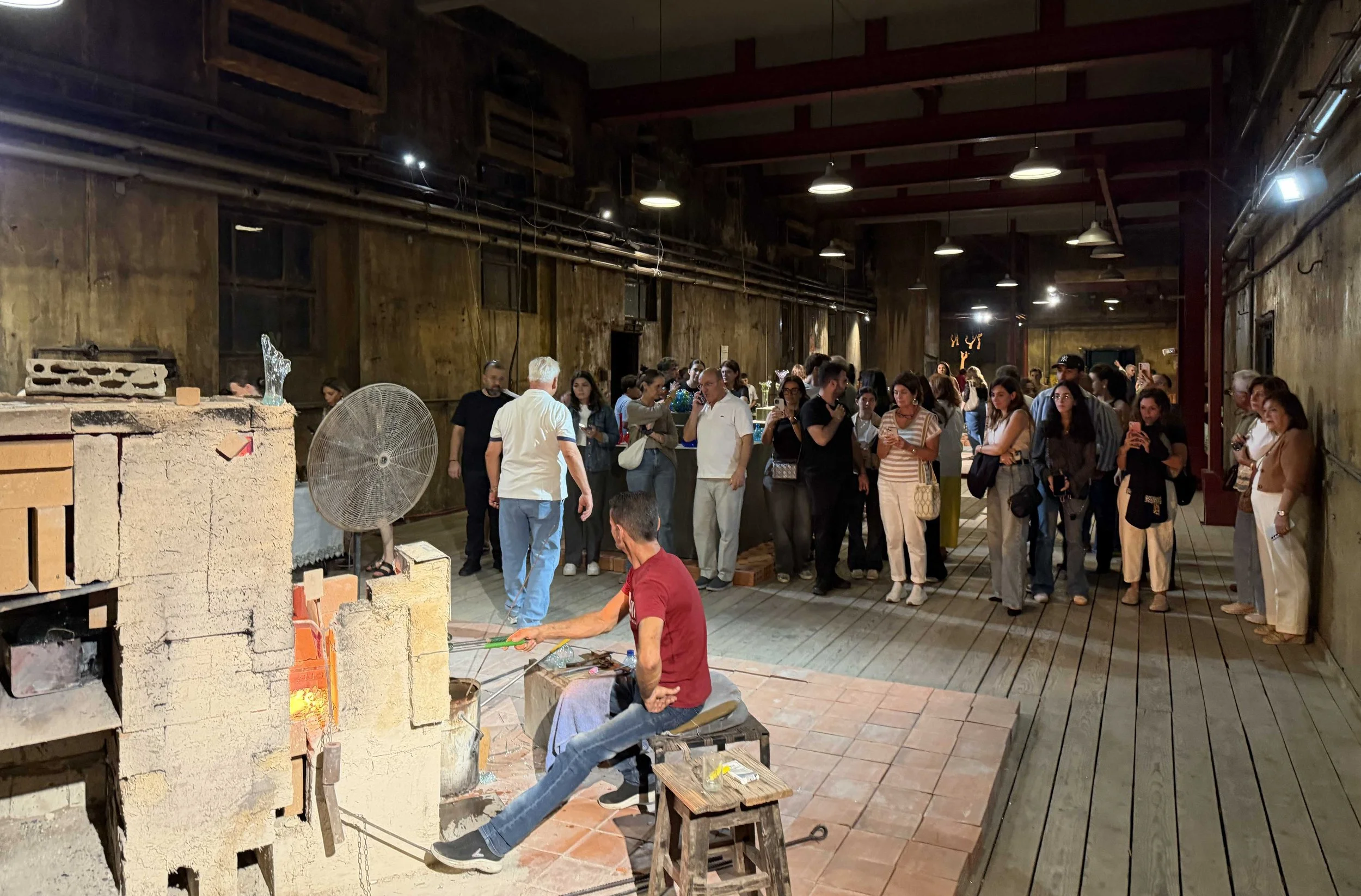
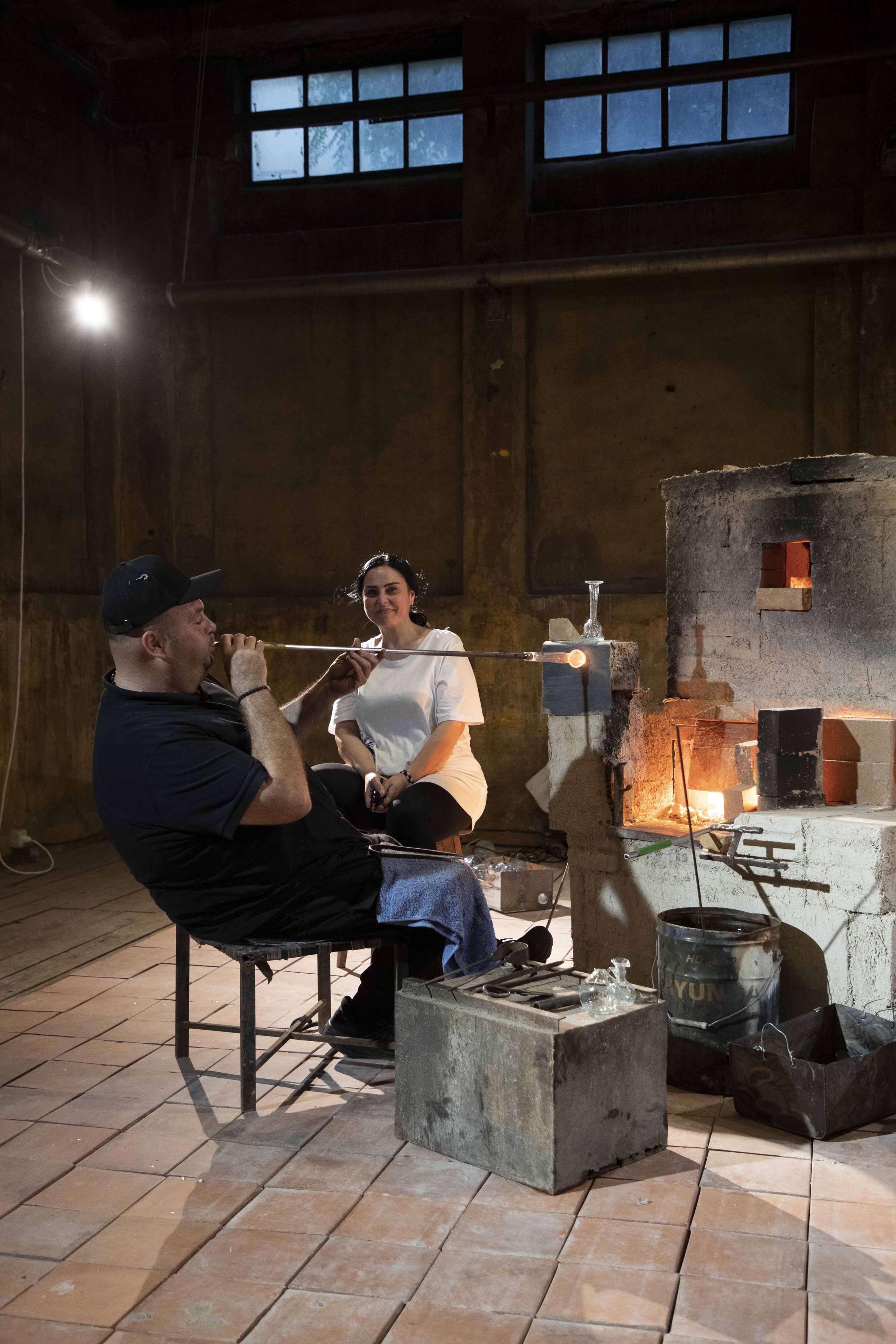
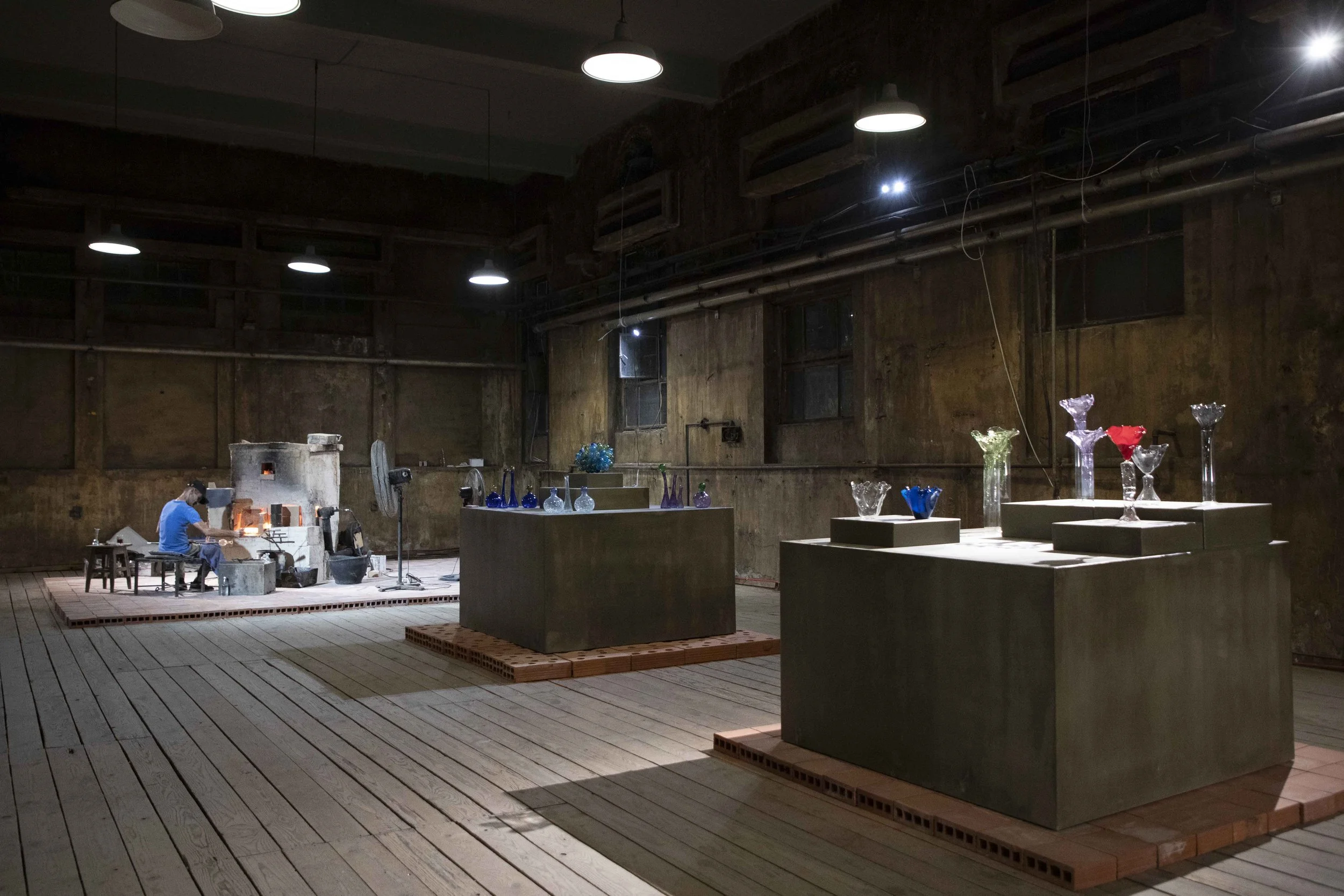
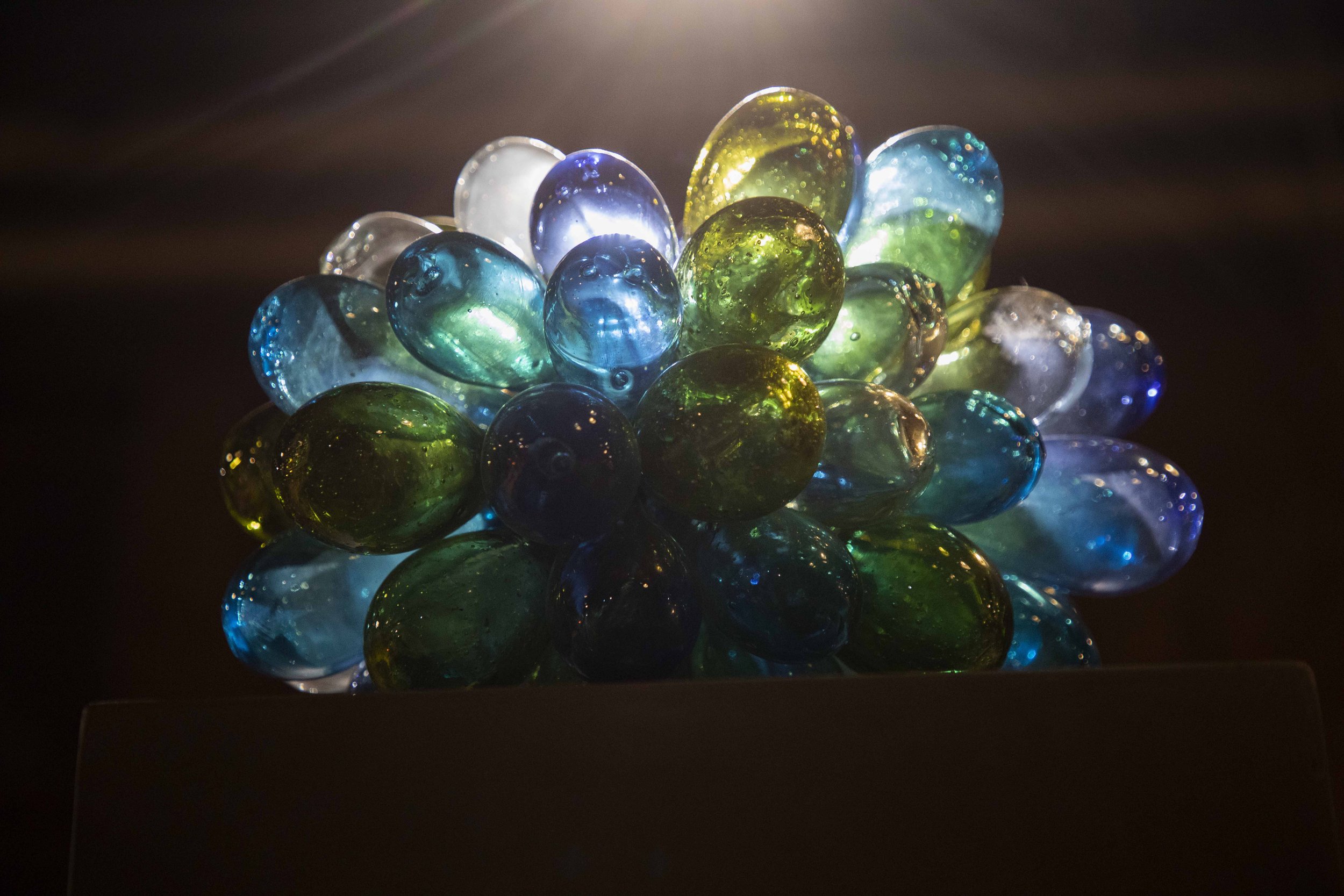
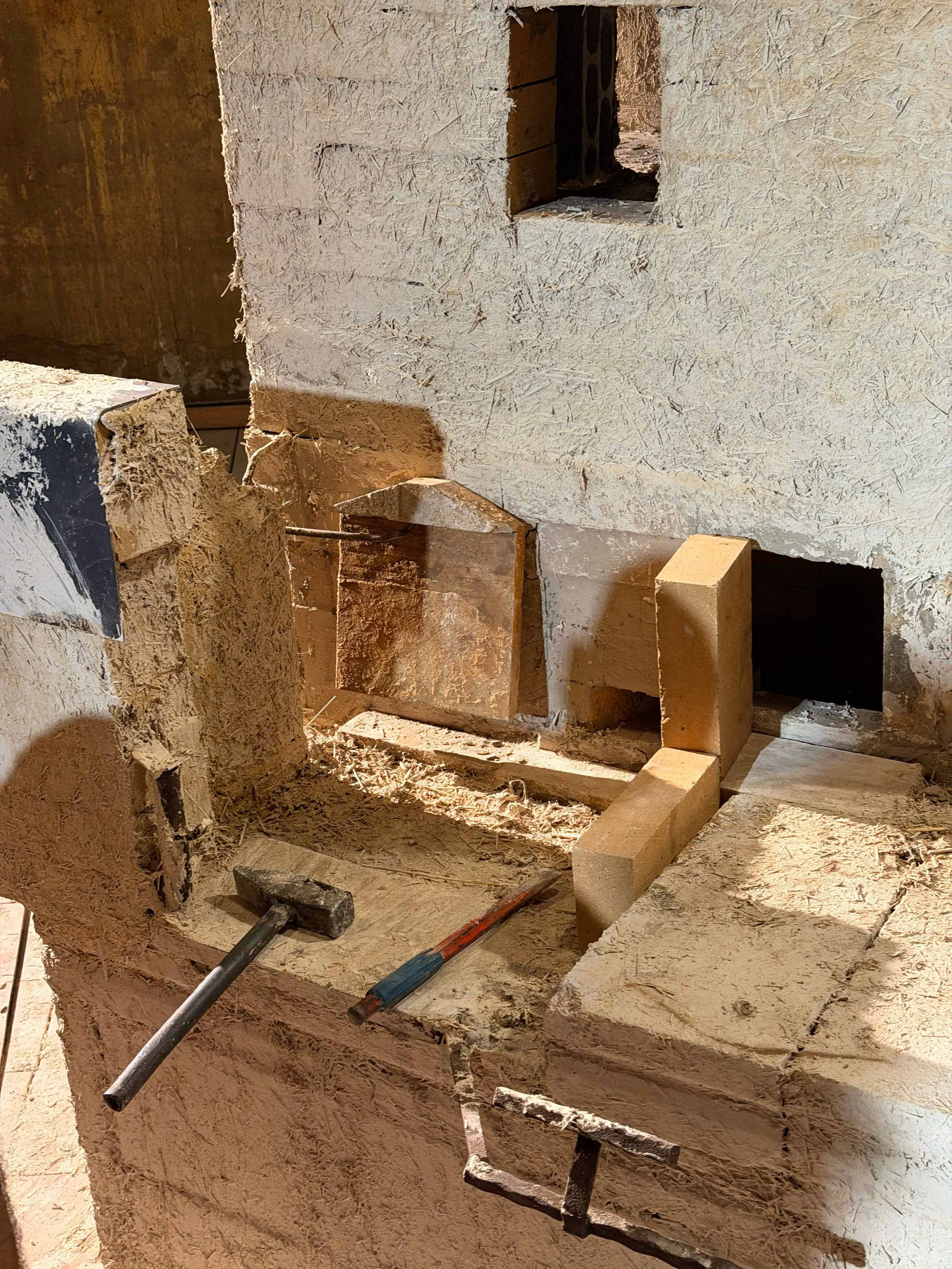
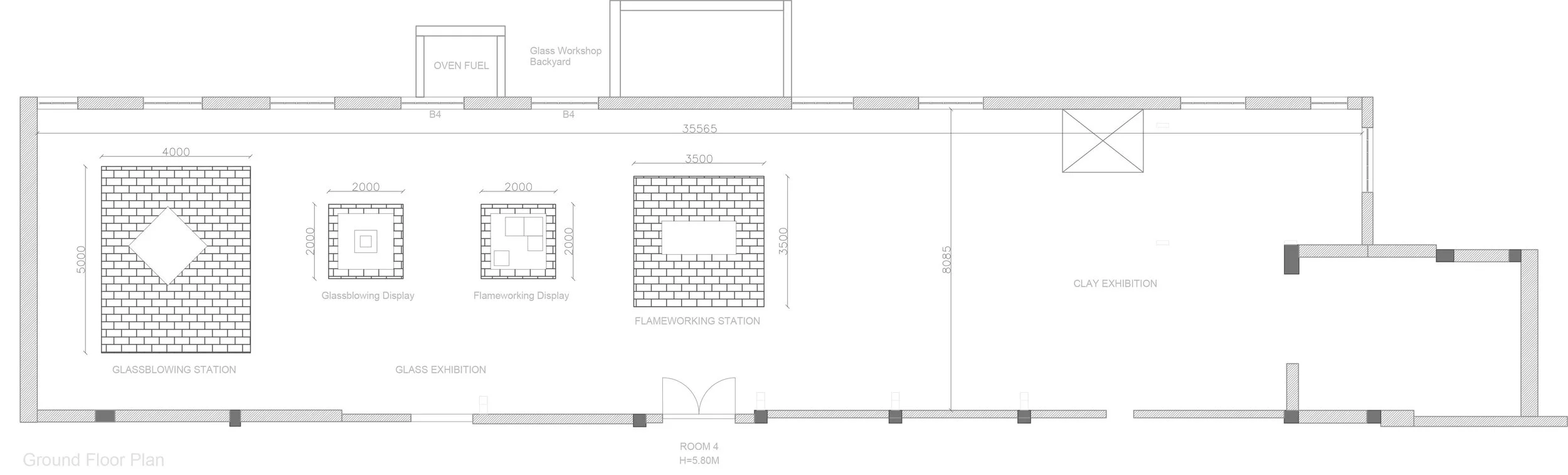
"Refracted Heritage, of Fire and Sand" is a cultural initiative set within the historic Abroyan Factory for the "Métiers d'Art Crafts Exhibition" of We Design Beirut. It presents an interactive exhibition showcasing Lebanese artisanship in motion, prioritizing awareness, education, and collective experience. Two working stations for live demonstrations are featured: one for glassblowing, where an oven is built on site using a primitive technique with fire stone, sandstone, and hay, and a second for flame-working with a torch pipe. Each glass technique has its own display to exhibit the outcomes.
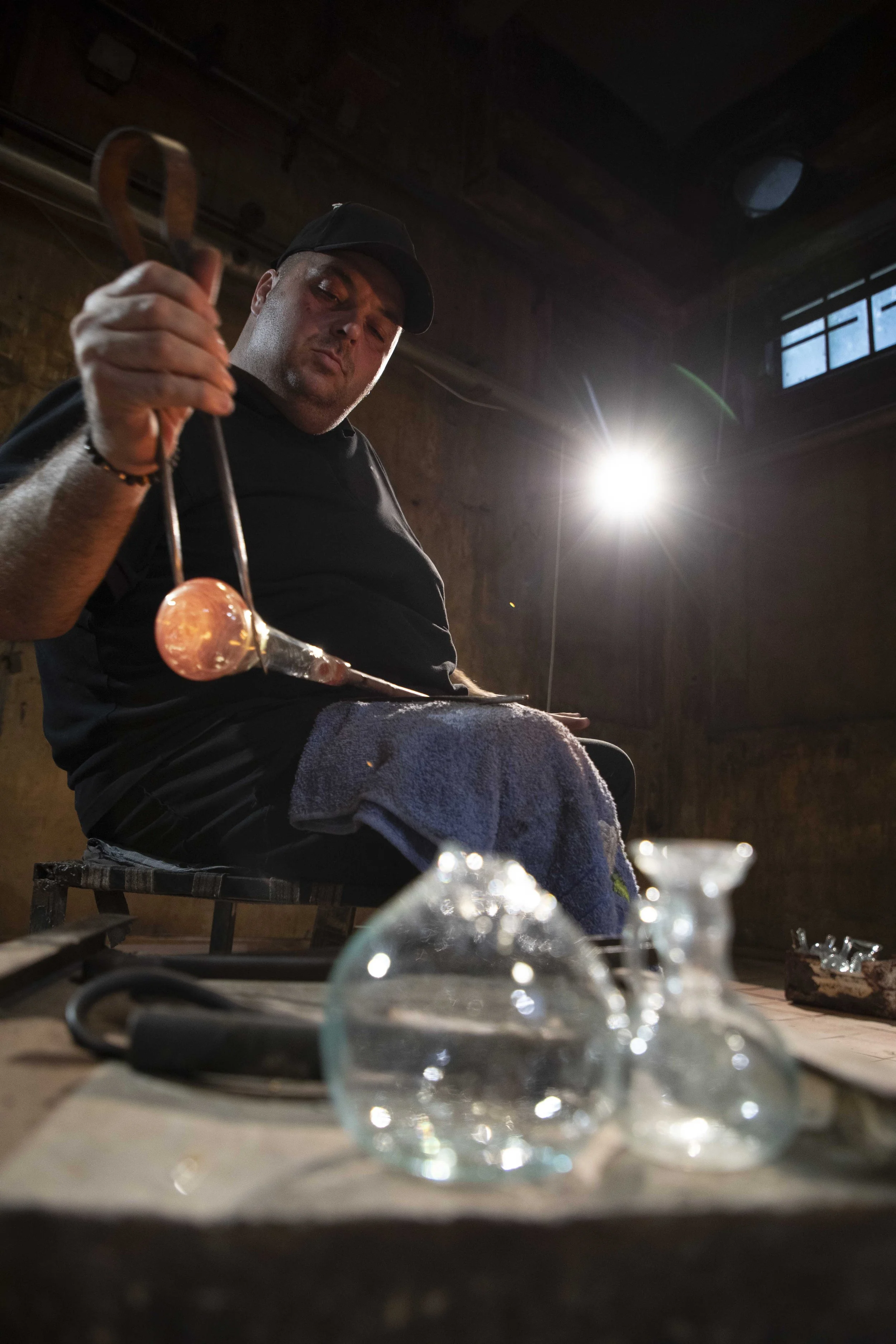
The goal is to revive Lebanon's traditional crafts of glassblowing and flame-working as cultural art forms, support our last remaining local artisans, and create a space for knowledge-sharing among artisans, designers, and all who walk through the door. It is not about seeing the end product but about witnessing the making-of.
Glassblowing was invented by the Phoenicians around the 1st century BCE and spread across the Mediterranean through the Roman Empire. Working with molten glass requires split-second timing, deep material knowledge, and physical coordination honed over decades - knowledge that cannot be written down, only transmitted through practice, which is why it also passes down from father to son. The aim is for people to truly appreciate the labor, skill, and material fragility that define glass artistry, and hopefully spark enough public interest to help preserve and grow this craft for future generations.
In a time when Lebanon faces cultural and economic crises that threaten its intangible heritage, these craftspeople continue to preserve and persevere. They are building their own rudimentary furnaces, recycling discarded glass, and doing it all with remarkable resilience and devotion.